

A PRACTICAL GUIDE TO ELECTRICAL SAFETY FOR NDIS PARTICIPANTS: WHAT SUPPORT COORDINATORS NEED TO KNOW
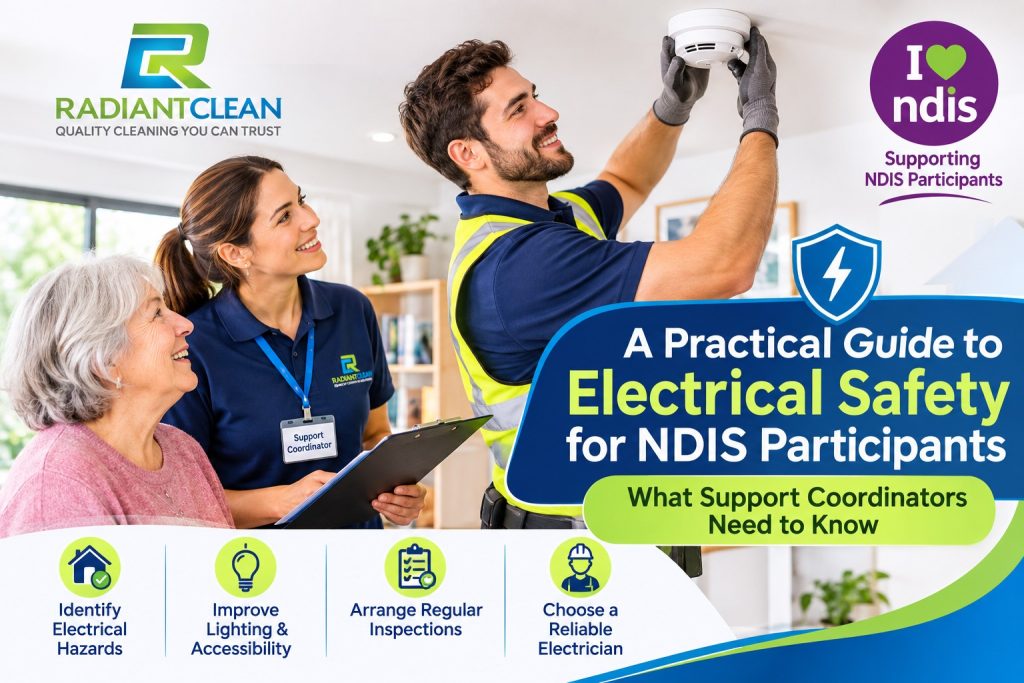
Electrical safety is essential for creating a safe and comfortable home for NDIS participants. Faulty wiring, damaged power points and poor lighting can increase the risk of accidents, particularly for people with mobility challenges or additional support needs.
For Support Coordinators, identifying potential hazards and arranging appropriate electrical services can help participants maintain a safer and more independent living environment.
Identify Common Electrical Hazards
Support Coordinators should look out for common electrical issues, including:
- Damaged power points: Cracked outlets, loose fittings or exposed wires.
- Faulty appliances: Damaged electrical cords, overheating or unusual smells.
- Overloaded outlets: Too many appliances connected to one power point.
- Poor lighting: Flickering lights or dark hallways and stairways.
- Wet-area hazards: Unsafe electrical fittings around bathrooms and kitchens.
Serious electrical issues should be inspected by a licensed electrician.
Improve Home Lighting and Accessibility
Good lighting can make everyday activities safer and easier for NDIS participants. Consider improvements such as:
- Installing brighter lighting in hallways and living areas.
- Adding motion-sensor lights for nighttime navigation.
- Installing accessible light switches.
- Improving lighting around entrances, bathrooms and stairways.
These upgrades can support safer movement and greater independence at home.
Arrange Regular Electrical Inspections
Regular electrical checks can help identify potential problems before they become serious. A basic checklist should include:
- Checking power points and switches for visible damage.
- Looking for exposed or damaged electrical cables.
- Checking safety switches and smoke alarms.
- Identifying frequently tripping circuits.
- Reviewing electrical safety in kitchens and bathrooms.
Electrical inspections and repairs should always be handled by appropriately licensed professionals.
When Should Support Coordinators Arrange an Electrician?
Professional electrical assistance may be needed when participants experience power interruptions, faulty outlets, damaged wiring or difficulties accessing electrical switches.
Support Coordinators should also consider electrical modifications when existing fixtures create accessibility challenges or affect participants’ daily activities.
Choose a Reliable Electrical Service Provider
Before arranging electrical work, consider the provider’s licensing, residential experience, communication, transparent pricing and ability to respect participants’ individual needs.
It is also important to confirm whether proposed work meets NDIS funding requirements before making arrangements.
Conclusion
Electrical safety plays an important role in maintaining a secure and accessible home for NDIS participants. By identifying hazards, improving lighting and arranging timely maintenance, Support Coordinators can help participants enjoy a safer and more independent lifestyle.
Radiant Clean supports NDIS participants with reliable home maintenance solutions, helping maintain comfortable and functional living spaces.
If you need any assistance, please don’t hesitate to contact our Radiant Clean Experts:
📞 Call us: +61 3 9367 7198
🌐 Book online: https://radiantclean.com.au/services/electrician/
▶️ Watch video: https://www.youtube.com/@radiantcleanndis

