

PREVENTING WATER LEAKS AND FLOODING IN NDIS HOMES: A GUIDE FOR SUPPORT COORDINATORS
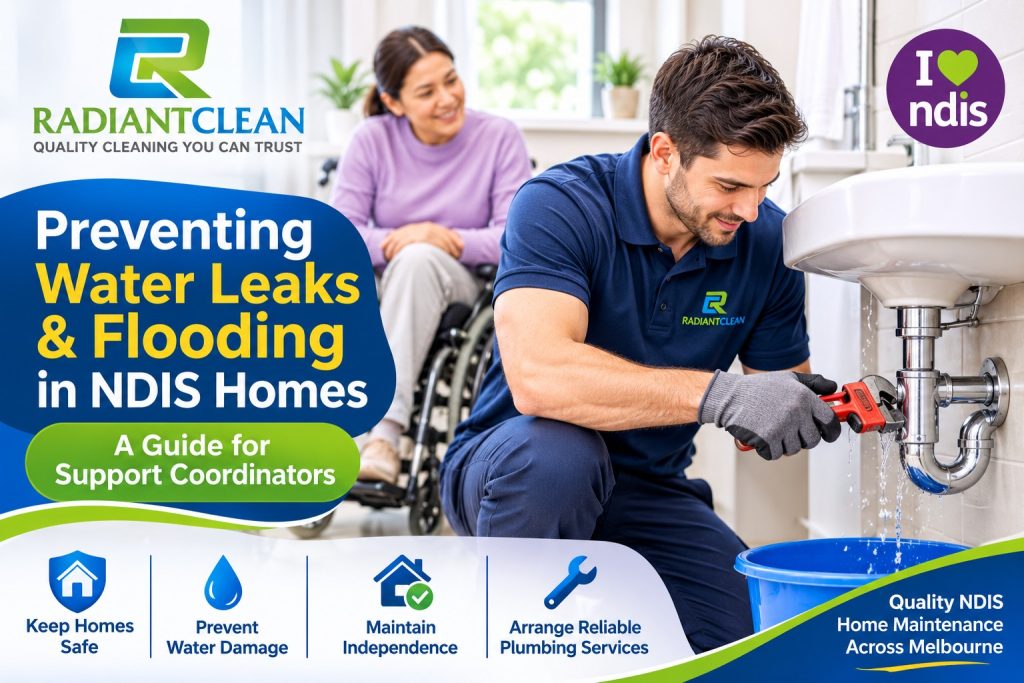
Water leaks and flooding can create serious safety risks for NDIS participants, affecting their comfort, independence and daily living. From leaking taps to blocked drains, minor plumbing problems can lead to property damage, mould growth and unsafe living conditions. Support Coordinators can help participants identify these issues and arrange appropriate home maintenance services.
Common Causes of Water Leaks in NDIS Homes
Some common plumbing problems include:
- Leaking taps and pipes: Dripping water can damage floors, walls and surrounding surfaces.
- Blocked drains: Blocked sinks, showers and toilets can cause water to overflow.
- Damaged plumbing connections: Worn or loose pipes may result in hidden leaks.
- Faulty hot water systems: Plumbing issues can disrupt daily activities and cause water damage.
- Poor drainage: Water pooling can increase flooding and slipping risks.
Why Water Leaks Are a Safety Concern
For NDIS participants, particularly those with limited mobility, water leaks can create additional household hazards.
Common risks include:
- Slippery floors: Standing water increases the risk of slips and falls.
- Mould growth: Excess moisture can contribute to mould and poor indoor air quality.
- Equipment damage: Water may damage mobility aids and essential household equipment.
- Daily disruptions: Plumbing problems can make bathrooms, kitchens and laundry areas difficult to use.
Practical Ways to Prevent Water Leaks and Flooding
Support Coordinators and participants can take several steps to maintain a safe home:
- Arrange regular plumbing inspections where necessary.
- Check taps, toilets and visible pipes for leaks.
- Keep drains clear of hair, grease and debris.
- Monitor hot water systems for unusual leaks.
- Ensure bathrooms have adequate drainage.
- Contact a qualified plumber when problems arise.
When Should Support Coordinators Arrange Plumbing Services?
Support Coordinators should consider arranging maintenance when participants experience recurring leaks, blocked drains, overflowing toilets or faulty hot water systems.
Serious leaks should be addressed promptly to prevent further damage and safety risks. Where plumbing work relates to disability-specific needs, coordinators can help explore appropriate solutions and potential NDIS funding eligibility. Ordinary household repairs are not automatically covered by NDIS funding.
Helping NDIS Participants Maintain a Safe Home
Preventing water leaks and flooding is essential for maintaining a safe and comfortable living environment. By identifying plumbing issues early and arranging reliable maintenance, Support Coordinators can help participants protect their homes and maintain independence.
Radiant Clean – Reliable NDIS Cleaning & Home Maintenance Across Melbourne
We support NDIS participants with quality cleaning and home maintenance services.
📞 Call us: +61 3 9367 7198
🌐 Book online: https://radiantclean.com.au/services/plumbing/
▶️ Watch video: https://www.youtube.com/@radiantcleanndis

