

COMMON HOUSEHOLD AREAS THAT REQUIRE SPECIAL ATTENTION DURING NDIS DEEP CLEANING
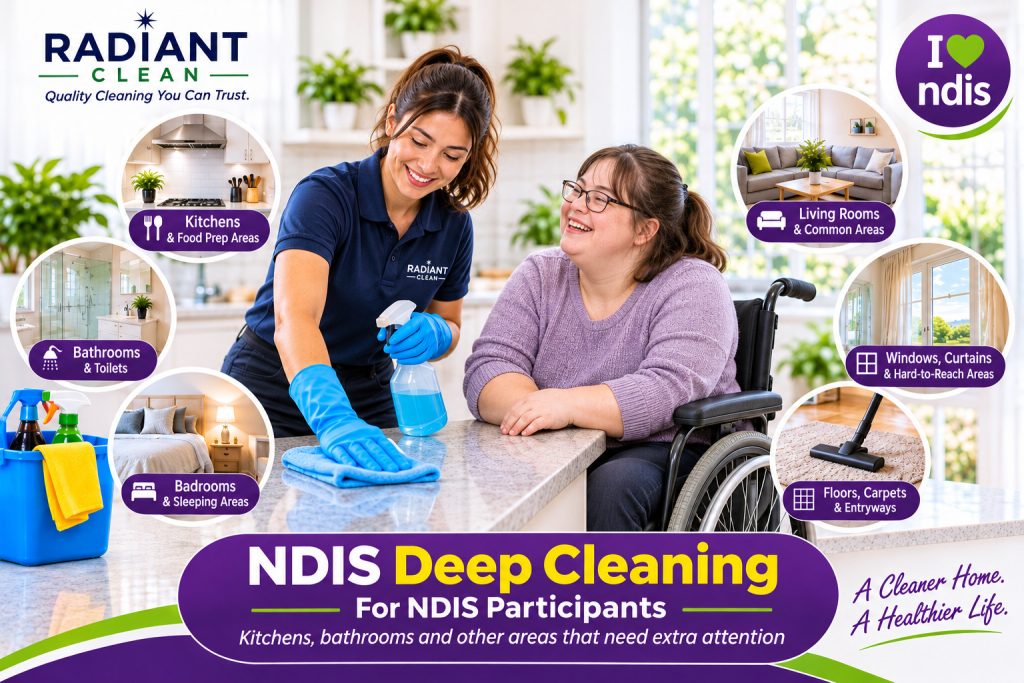
Maintaining a clean and hygienic home is essential for the health, comfort and wellbeing of NDIS participants. While regular cleaning manages everyday mess, some household areas require deeper attention to remove built-up dirt, grease, dust, mould and bacteria.
For Support Coordinators, recognising these areas can help identify participants who may benefit from additional NDIS deep cleaning support.
Kitchens and Food Preparation Areas
Kitchens can accumulate grease, food residue and bacteria over time. Deep cleaning should focus on ovens, stovetops, rangehoods, sinks, benchtops, cupboard doors and hard-to-reach corners. Maintaining clean food preparation areas helps support better household hygiene.
Bathrooms and Toilets
Bathrooms require special attention because moisture can encourage mould and bacterial growth. Important areas include shower screens, tiles, grout, toilets, sinks, taps and floor drains. Regular deep cleaning helps maintain a fresher and more hygienic bathroom environment.
Bedrooms and Sleeping Areas
Dust, allergens and dirt can accumulate in bedrooms, particularly under furniture and around storage areas. Deep cleaning may include vacuuming carpets, cleaning window sills, dusting furniture and removing accumulated dirt from overlooked surfaces.
Living Rooms and Common Areas
Frequently used living spaces can collect dust, dirt and everyday contaminants. Sofas, upholstery, cushions, carpets, shelves, door handles and furniture surfaces should receive appropriate cleaning attention to maintain a comfortable environment.
Windows, Curtains and Hard-to-Reach Areas
Some areas are easily overlooked during routine cleaning. Window tracks, blinds, skirting boards, ceiling fans and accessible spaces behind furniture can accumulate significant amounts of dust and grime.
Floors, Carpets and Entryways
Floors and entryways collect outdoor dirt, dust and debris. Thorough vacuuming, mopping and cleaning floor edges can help improve household hygiene and reduce potential slipping and tripping hazards.
How Can Support Coordinators Identify the Need for Deep Cleaning?
Support Coordinators should look for signs such as persistent dirt, visible mould, accumulated dust, unhygienic kitchen or bathroom conditions, and areas participants struggle to clean independently.
Understanding individual circumstances and disability-related needs can help determine whether additional cleaning support is appropriate.
Supporting Cleaner Homes with Radiant Clean
At Radiant Clean, we provide reliable NDIS cleaning and home maintenance services across Melbourne. Our services include regular domestic cleaning, deep cleaning and assistance with challenging household cleaning tasks.
We prioritise clear communication, reliable support and respect for each participant’s preferences.
Looking for reliable NDIS deep cleaning support in Melbourne?
📞 Call us: +61 3 9367 7198
🌐 Book online: https://radiantclean.com.au/services/deep-clean/
▶️ Watch video: https://www.youtube.com/@radiantcleanndis

