

NDIS BIOHAZARD CLEANING: A GUIDE FOR SUPPORT COORDINATORS AND FAMILIES
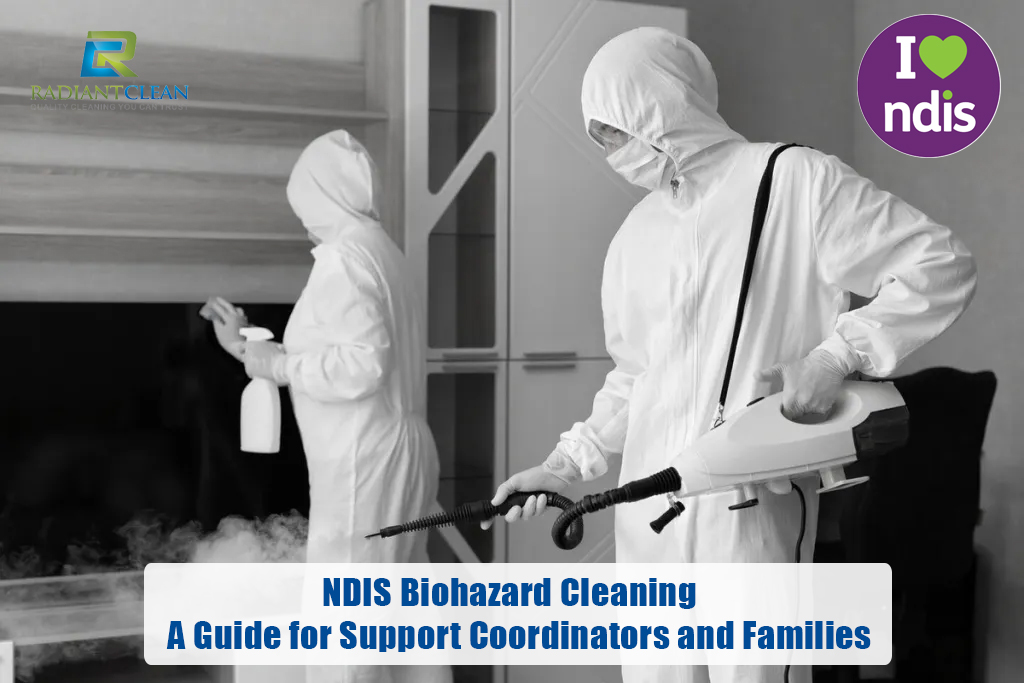
Maintaining a safe and hygienic home is essential for people living with disability. In some situations, homes may require specialised cleaning due to biological hazards such as bodily fluids, contamination, or other health risks. NDIS biohazard cleaning services help restore safe living conditions for participants. For support coordinators and families, understanding how these services work can make it easier to arrange the right support when needed.
What Is Biohazard Cleaning?
Biohazard cleaning refers to professional cleaning that handles potentially dangerous biological materials. These may include bodily fluids, medical waste, or contaminated surfaces that require specialised equipment and safety procedures.
Unlike regular cleaning, biohazard cleaning is carried out by trained professionals who follow strict health and safety standards to safely remove hazardous materials and sanitise affected areas.
When Biohazard Cleaning May Be Needed
NDIS participants may require biohazard cleaning when contamination creates health risks in the home. Common situations may include:
- Accidental spills involving bodily fluids
- Contaminated areas caused by health conditions
- Hoarding situations that lead to biological hazards
- Post-incident cleaning requiring specialised sanitation
Professional cleaning ensures the environment becomes safe for the participant to continue living in.
Can Biohazard Cleaning Be Funded Under the NDIS?
In some cases, biohazard cleaning may be funded through an NDIS plan if the service is considered reasonable and necessary to support the participant’s disability-related needs. Funding may come from supports related to maintaining a safe home environment, depending on the participant’s plan.
The Role of Support Coordinators and Families
Support coordinators help participants access the right services by assessing the situation, connecting with qualified cleaning providers, and confirming whether the service aligns with the participant’s NDIS funding.
Families also play an important role by identifying issues in the home and communicating concerns to the support team.
Conclusion
NDIS biohazard cleaning helps maintain safe and healthy homes when serious contamination occurs. By working together, support coordinators and families can ensure participants receive timely support and continue living in a safe environment.
If you need any assistance, please don’t hesitate to contact our Radiant Clean Experts:
📞 Call us: +61 3 9367 7198
🌐 Book online: https://radiantclean.com.au/services/bio-hazard-clean/
▶️ Watch video: https://www.youtube.com/@radiantcleanndis

