

HOW SUPPORT COORDINATORS CAN JUSTIFY PEST CONTROL IN AN NDIS PLAN REVIEW
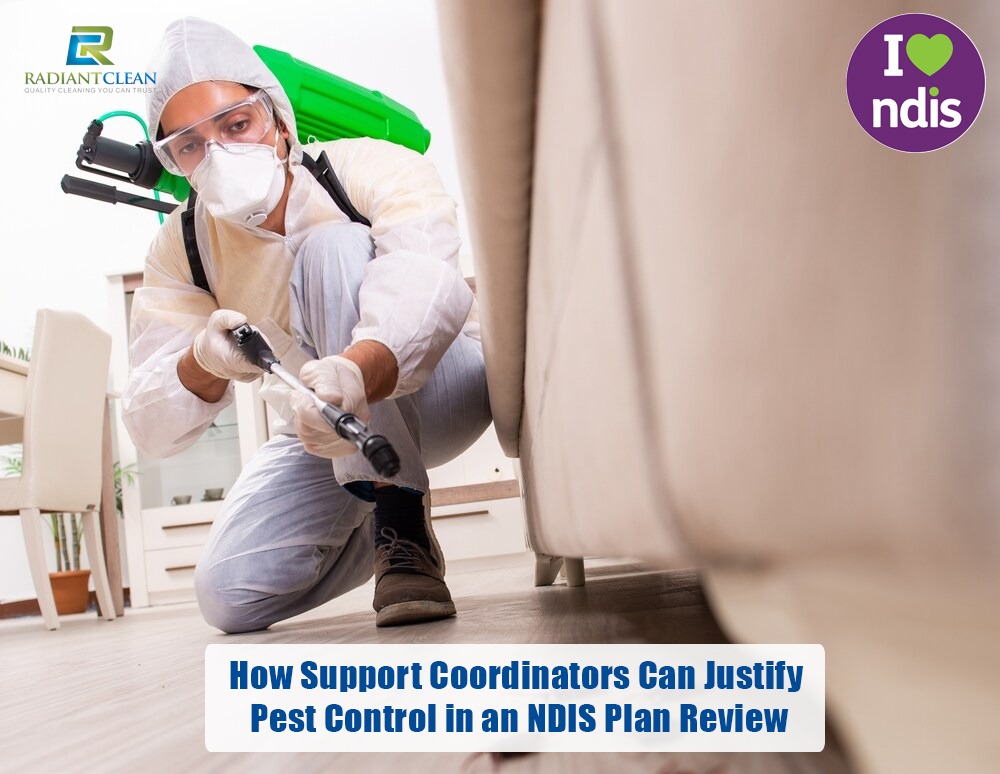
Pest infestations can create serious health and safety risks for NDIS participants, especially those whose disability makes it difficult to maintain a safe home environment. While NDIS pest control is not automatically funded, it may be considered if it meets the reasonable and necessary criteria. Support Coordinators play an important role in presenting a clear case during an NDIS plan review.
Understand the Participant’s Needs
The first step is identifying how the pest infestation affects the participant’s disability and daily living. Common issues include contaminated food areas, disrupted sleep from bed bugs, increased health risks, or reduced ability to safely use parts of the home. Linking the infestation to the participant’s functional needs strengthens the funding request.
Gather Supporting Evidence
A successful plan review relies on clear documentation. Useful evidence may include:
- Occupational therapist or allied health reports
- Medical letters outlining health risks
- Photos of the infestation
- Pest inspection reports
- Quotes from licensed pest control providers
This information helps demonstrate that professional treatment is needed rather than routine household maintenance.
Show the Impact on Daily Living
Support Coordinators should explain how the pest problem affects the participant’s independence and wellbeing. Examples include difficulty preparing meals due to cockroach infestations, anxiety caused by ongoing pest activity, or safety risks for participants with limited mobility. Practical examples help NDIS planners understand why professional pest control is necessary.
Present a Clear Case at the Plan Review
When preparing for the review, summarise the participant’s disability-related needs, the evidence collected, and the expected outcomes of pest control services. Focus on how treatment will improve health, safety, independence, and the participant’s ability to live comfortably at home.
Conclusion
Although pest control is not automatically funded under the NDIS, it may be supported when there is a clear connection between the participant’s disability and the need for professional treatment. By gathering strong evidence and demonstrating the impact on daily living, Support Coordinators can help build a well-supported case during an NDIS plan review and advocate for safer, healthier living environments.
Disclaimer: NDIS funding decisions are assessed individually. Participants should speak with their Support Coordinator or the NDIS to determine whether pest control may be appropriate for their circumstances.
If you need any assistance, please don’t hesitate to contact our Radiant Clean Experts:
📞 Call us: +61 3 9367 7198
🌐 Book online: https://radiantclean.com.au/services/pest-control/
▶️ Watch video: https://www.youtube.com/@radiantcleanndis

