

THE ROLE OF SUPPORT COORDINATORS IN ARRANGING TRAUMA CLEANING SERVICES FOR NDIS PARTICIPANTS
Understanding NDIS Trauma Cleaning
Maintaining a safe and hygienic home is essential for NDIS participants’ health, comfort and independence. However, some living environments require more than regular house cleaning. NDIS trauma cleaning services help address complex situations involving significant contamination or specialist cleaning needs.
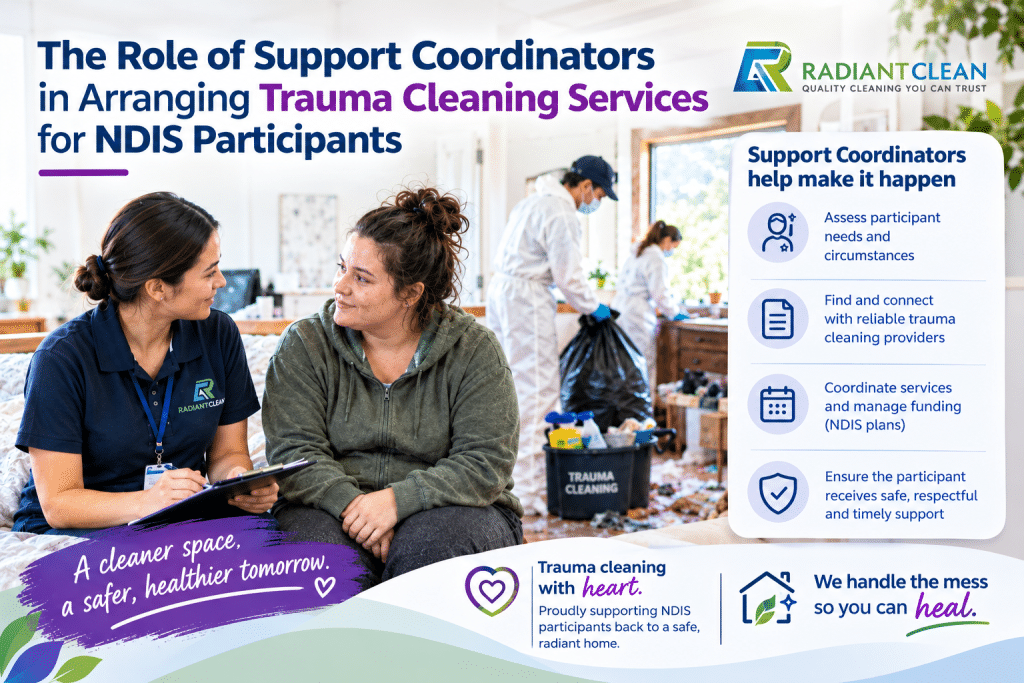
Support Coordinators can play an important role in identifying these needs and connecting participants with suitable cleaning providers.
Identifying Participants’ Cleaning Needs
Firstly, Support Coordinators can help recognise when a participant may require specialist trauma cleaning. By understanding the participant’s circumstances and discussing their concerns, they can help identify appropriate cleaning solutions while respecting personal preferences, privacy and dignity.
Choosing a Reliable Trauma Cleaning Provider
Finding a reliable NDIS trauma cleaning provider is essential. Support Coordinators should consider the provider’s experience, safety procedures, service scope and ability to handle complex cleaning requirements.
Additionally, clear communication helps ensure the provider understands the participant’s needs and can recommend suitable cleaning services before work begins.
Coordinating Services Around Participants
Every participant has different circumstances and support requirements. Therefore, Support Coordinators can help arrange cleaning at a convenient time and communicate relevant requirements to the provider.
Where appropriate, they may also coordinate with family members or support workers, with the participant’s consent. This approach helps minimise disruption and ensures the service respects the participant’s preferences.
Understanding NDIS Funding Considerations
Before booking a service, Support Coordinators should consider whether the proposed cleaning support aligns with the participant’s disability-related needs and applicable NDIS funding rules.
Importantly, not all trauma cleaning services are automatically covered by NDIS funding. Eligibility depends on individual circumstances and relevant funding requirements, so these should be clarified before confirming a booking.
Following Up After Cleaning
Finally, following up with the participant helps determine whether the cleaning service has addressed their concerns. Support Coordinators can gather feedback, identify remaining issues and consider whether additional cleaning support may be needed.
Partner With Radiant Clean
Arranging trauma cleaning involves understanding participant needs, selecting suitable providers and prioritising safety and dignity. Radiant Clean offers specialist cleaning services for complex residential cleaning needs.
Contact our team to discuss your requirements and explore suitable cleaning solutions for NDIS participants.
If you need any assistance, please don’t hesitate to contact our Radiant Clean Experts:
📞 Call us: +61 3 9367 7198
🌐 Book online: https://radiantclean.com.au/services/trauma-clean/
▶️ Watch video: https://www.youtube.com/@radiantcleanndis

