

A SUPPORT COORDINATOR’S CHECKLIST FOR ORGANISING DEEP CLEANING SERVICES
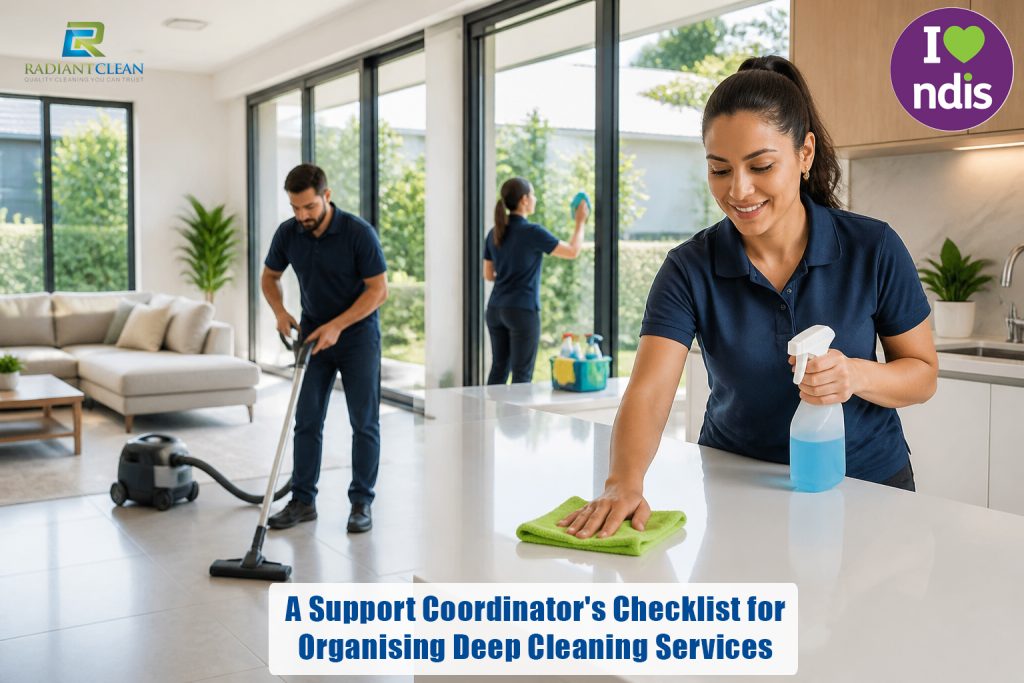
A clean, hygienic home is essential for the health, safety, and wellbeing of NDIS participants. While regular cleaning helps maintain a home, deep cleaning services may be needed when intensive cleaning is required due to disability-related barriers. Support Coordinators play an important role in identifying these needs and arranging appropriate services that align with a participant’s NDIS goals.
-
Assess the Participant’s Needs
Start by evaluating the participant’s living environment and functional challenges. Consider whether poor hygiene, limited mobility, chronic illness, or other disability-related factors make deep cleaning necessary. If available, include recommendations from allied health professionals or carers to support the assessment.
-
Link the Service to NDIS Goals
Ensure the deep cleaning service supports the participant’s NDIS goals, such as maintaining a safe home, improving independence, or reducing health risks. Clearly documenting this connection helps demonstrate why the support may be considered reasonable and necessary.
-
Create a Cleaning Scope
Identify the areas requiring attention, such as kitchens, bathrooms, carpets, floors, or spaces affected by mould, dust, or built-up grime. A detailed cleaning scope helps providers deliver the right service and ensures expectations are clear.
-
Choose a Professional Provider
Select a cleaning provider with experience supporting people with disability. Look for professional equipment, appropriate insurance, transparent pricing, and reliable communication. An experienced provider is more likely to deliver safe, high-quality results tailored to the participant’s needs.
-
Document and Review
Keep records of assessments, participant consent, quotes, service details, and outcomes. After the cleaning is complete, review whether the service improved the home’s hygiene, reduced health or safety risks, and met the participant’s expectations. This information can support future planning and ongoing care decisions.
Conclusion
Using a structured checklist helps Support Coordinators organise NDIS deep cleaning services efficiently while focusing on participant wellbeing. By assessing needs, linking the service to NDIS goals, selecting a qualified provider, and documenting outcomes, Support Coordinators can help create a safer, healthier home environment that supports greater independence and quality of life.
If you need any assistance, please don’t hesitate to contact our Radiant Clean Experts:
📞 Call us: +61 3 9367 7198
🌐 Book online: https://radiantclean.com.au/services/deep-clean/
▶️ Watch video: https://www.youtube.com/@radiantcleanndis

