

A SUPPORT COORDINATOR’S GUIDE TO NDIS TRAUMA CLEANING SERVICES
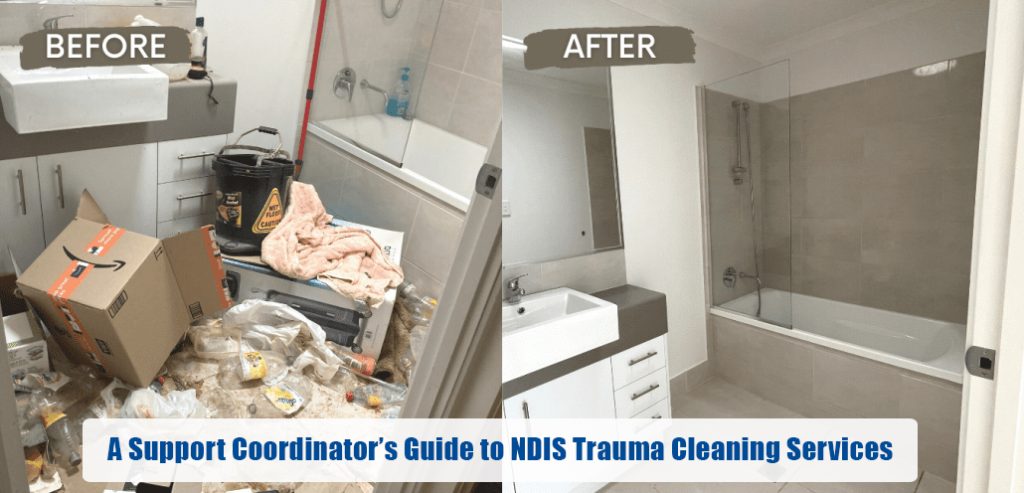
When an NDIS participant experiences a traumatic event, cleaning and restoring their home can be overwhelming. NDIS trauma cleaning services provide specialist cleaning for situations involving blood, bodily fluids, accidents, unattended deaths, or other potentially hazardous contamination.
For Support Coordinators, knowing how to arrange the right cleaning support can help participants return to a safe and comfortable living environment.
What Is NDIS Trauma Cleaning?
Trauma cleaning is a specialised service that goes beyond standard household cleaning. Professional cleaners use appropriate equipment, PPE, cleaning methods, and waste-disposal procedures to safely manage affected areas.
Services may include:
- Biohazard and contamination cleaning
- Disinfection of affected surfaces
- Safe removal of contaminated materials
- Odour treatment
- Decontamination of floors and other surfaces
When Might a Participant Need Trauma Cleaning?
An NDIS participant may require specialist cleaning after:
- A serious accident or injury
- Blood or bodily fluid contamination
- An unattended death
- Significant contamination within the home
- An incident that makes the property unsafe or unhygienic
Support Coordinators should consider the participant’s individual circumstances and NDIS plan before arranging services.
How Can Support Coordinators Help?
Support Coordinators can play an important role in coordinating trauma cleaning services.
- Assess the Situation
Understand what happened, which areas are affected, and whether there are immediate health or safety concerns.
- Check NDIS Funding
Review the participant’s plan and determine whether the requested cleaning support is appropriate and aligns with their available funding.
- Choose a Specialist Provider
Look for an experienced provider that understands trauma cleaning, biohazard procedures, participant privacy, and dignity.
- Coordinate the Service
Arrange property access, communicate with relevant support people, and schedule cleaning at a suitable time for the participant.
- Follow Up
After cleaning is completed, check whether the participant’s home is safe and whether further support is required.
Supporting Participants With Compassion
Trauma cleaning is about more than cleaning a property. Participants may already be experiencing emotional stress, so Support Coordinators should prioritise privacy, dignity, communication, and participant choice throughout the process.
Final Thoughts
Professional NDIS trauma cleaning services can help participants restore a safe and hygienic home after difficult events. With careful planning and a participant-centred approach, Support Coordinators can make the process smoother, safer, and less stressful.
If you need any assistance, please don’t hesitate to contact our Radiant Clean Experts:
📞 Call us: +61 3 9367 7198
🌐 Book online: https://radiantclean.com.au/services/trauma-clean/
▶️ Watch video: https://www.youtube.com/@radiantcleanndis

