

NDIS BIOHAZARD CLEANING FOR HOARDING, BODILY FLUIDS AND UNSAFE LIVING ENVIRONMENTS
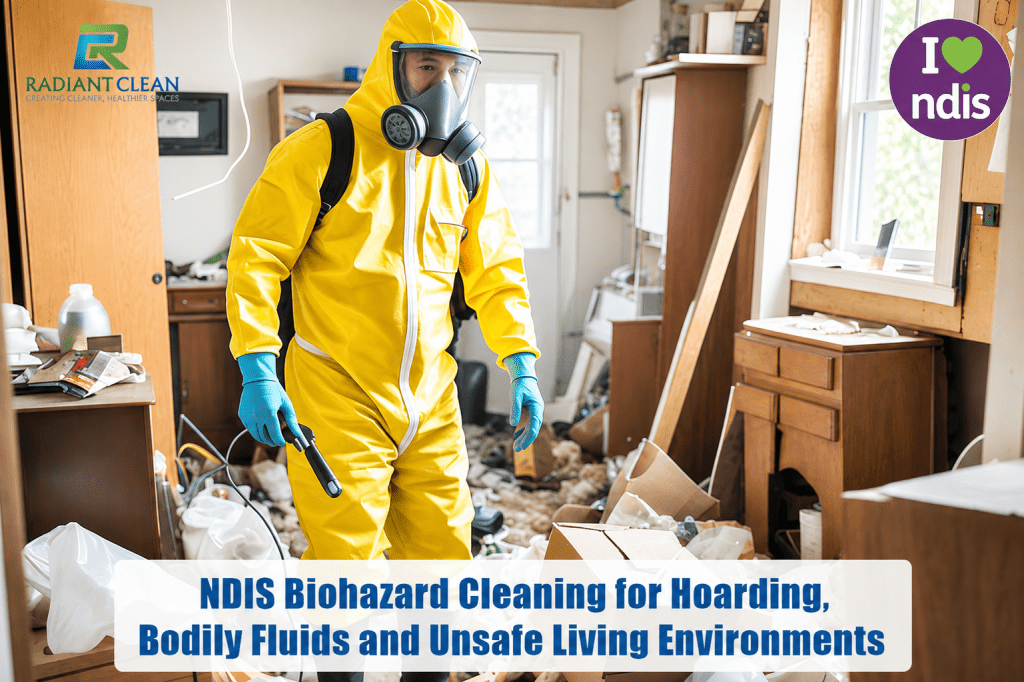
For some NDIS participants, disability-related circumstances can make it difficult to maintain a clean, safe, and hygienic home. Hoarding, bodily fluid contamination, and unsafe living environments may create risks that require more than standard household cleaning. NDIS biohazard cleaning can help address these challenging situations professionally and respectfully.
What Is NDIS Biohazard Cleaning?
Biohazard cleaning involves specialised cleaning and decontamination of areas affected by potentially harmful biological materials. Unlike regular cleaning, it may require protective equipment, specialised cleaning methods, contamination control, and appropriate waste handling.
For NDIS participants, specialist cleaning may be considered when disability-related needs contribute to significant hygiene or safety concerns.
Biohazard Cleaning for Hoarding
Hoarding can lead to excessive clutter, accumulated rubbish, food waste, unpleasant odours, pests, mould, and blocked walkways. These conditions can make essential areas such as kitchens, bathrooms, and bedrooms difficult or unsafe to access.
Professional biohazard or specialist cleaning can help remove contaminated materials, clean affected areas, and restore a safer living environment.
Cleaning Bodily Fluid Contamination
Blood, urine, faeces, vomit, and other bodily fluids may require specialist cleaning due to potential contamination risks. Professional cleaners can use appropriate protective equipment and cleaning procedures to safely treat affected surfaces and manage contaminated waste.
Unsafe Living Environments
An unsafe home may result from severe clutter, contamination, waste accumulation, mould, or poor hygiene. For NDIS participants, these conditions may affect safety, independence, and the ability to use important areas of the home.
Specialist cleaning can help create a cleaner and more functional environment.
What Should Support Coordinators and Plan Managers Consider?
When arranging NDIS biohazard cleaning, Support Coordinators, Plan Managers, and Self-Managers should consider:
- The participant’s individual circumstances and support needs
- The type and severity of contamination
- Whether specialist cleaning is required
- Available NDIS funding and applicable requirements
- The provider’s experience with biohazard and specialist cleaning
It is also important to distinguish specialist cleaning from ordinary household cleaning.
Final Thoughts
NDIS biohazard cleaning can help address serious hygiene and safety concerns associated with hoarding, bodily fluids, and unsafe living environments. With the right specialist provider, participants can receive professional cleaning while maintaining their dignity, privacy, and safety.
If you need any assistance, please don’t hesitate to contact our Radiant Clean Experts:
📞 Call us: +61 3 9367 7198
🌐 Book online: https://radiantclean.com.au/services/bio-hazard-clean/
▶️ Watch video: https://www.youtube.com/@radiantcleanndis

