

NDIS HOARDING CLEANING: WHAT SUPPORT COORDINATORS NEED TO UNDERSTAND ABOUT PARTICIPANT NEEDS AND SERVICE OPTIONS
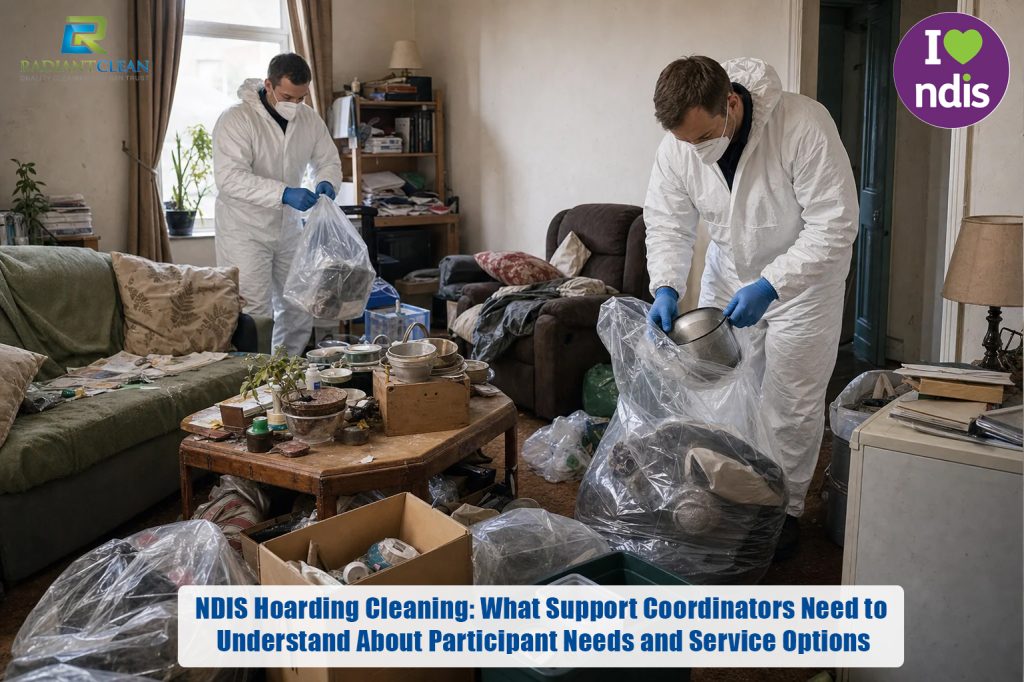
Hoarding can significantly affect an NDIS participant’s safety, hygiene, mobility and ability to use their home comfortably. For Support Coordinators, understanding participant needs and available cleaning options is essential when arranging appropriate support.
Understanding Hoarding and Its Impact
Hoarding involves persistent difficulty discarding possessions, which can lead to excessive clutter and restricted access to important areas of the home. In more serious situations, rubbish, dust, mould, unpleasant odours or pests may create additional safety and hygiene concerns.
For NDIS participants, these conditions can make everyday activities more difficult and may affect independence and wellbeing.
Assessing Participant Needs
Before arranging hoarding cleaning, Support Coordinators should consider the participant’s individual circumstances. Important factors may include:
- The level and location of clutter
- Mobility and accessibility requirements
- Rubbish or unwanted items requiring removal
- Pest, mould or hygiene concerns
- Areas requiring deep or specialised cleaning
- The participant’s preferences and comfort level
- Whether family members, carers or other professionals are involved
A participant-centred approach can make the cleaning process more comfortable and effective.
NDIS Hoarding Cleaning Service Options
Depending on the participant’s circumstances and plan arrangements, several services may be relevant. These can include deep cleaning, decluttering assistance, rubbish removal, carpet cleaning, pest control and specialised cleaning.
Some properties may require multiple services to address different issues. A professional provider can assess the property and recommend suitable cleaning solutions.
Supporting the Participant
Hoarding cleaning should always be approached respectfully. Participants should be involved in decisions about their belongings and the cleaning process wherever possible.
Support Coordinators can help facilitate communication between participants, families, carers and cleaning providers. Establishing priorities before cleaning begins can also help reduce stress and ensure everyone understands the planned work.
Choosing the Right Provider
When selecting an NDIS cleaning provider, Support Coordinators should consider their experience with complex cleaning situations, communication, professionalism and ability to work respectfully with people with disability.
It is also important to check the participant’s NDIS funding arrangements and confirm whether the proposed service is appropriate and claimable under their plan.
Conclusion
NDIS hoarding cleaning is about more than removing clutter. It focuses on creating a safer, cleaner and more accessible living environment while respecting the participant’s dignity and choices. Support Coordinators can play an important role by understanding individual needs and connecting participants with appropriate service options.
If you need any assistance, please don’t hesitate to contact our Radiant Clean Experts:
📞 Call us: +61 3 9367 7198
🌐 Book online: https://radiantclean.com.au/services/trauma-clean/
▶️ Watch video: https://www.youtube.com/@radiantcleanndis

