

CAN NDIS COVER EMERGENCY PEST CONTROL? WHAT SUPPORT COORDINATORS SHOULD KNOW
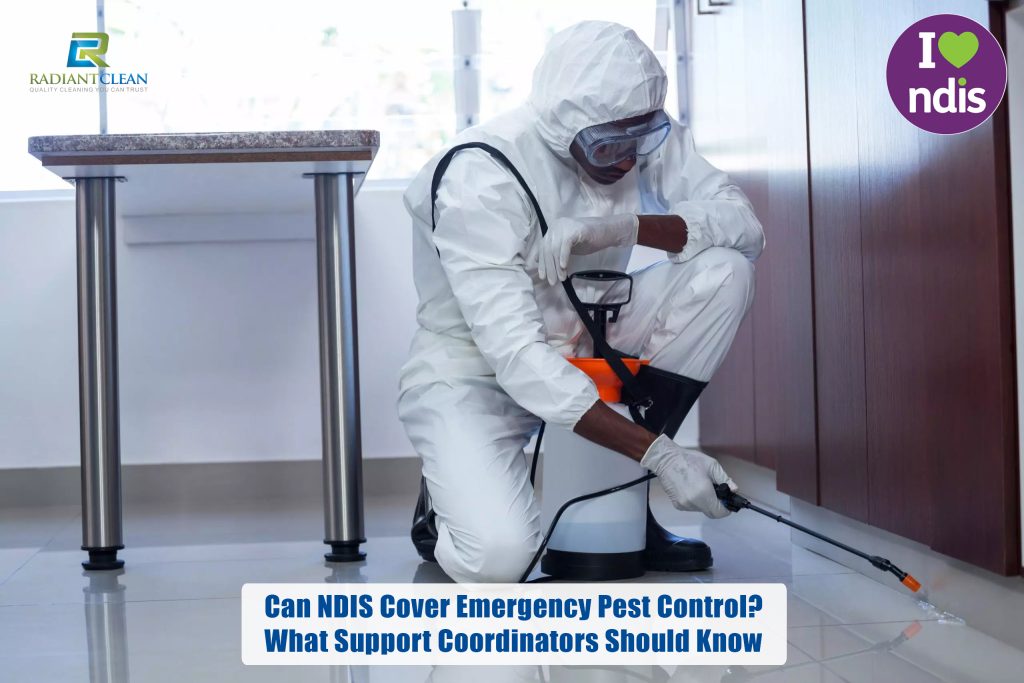
When a participant experiences a sudden pest infestation, the situation can quickly become more than just a household inconvenience. For many individuals supported under the National Disability Insurance Scheme (NDIS), emergency pest control may directly impact health, safety, and daily functioning.
But can NDIS actually cover emergency pest control services? Here’s what Support Coordinators need to know.
When Is Emergency Pest Control Considered “Reasonable and Necessary”?
Under NDIS guidelines, supports must meet the “reasonable and necessary” criteria. In general, routine home maintenance — including standard pest control — is considered a personal responsibility.
However, emergency pest control may be funded when:
- The infestation poses an immediate health or safety risk
- The participant’s disability makes them unable to manage the situation independently
- The issue directly relates to disability-related needs
- There is clear supporting evidence from health professionals
For example, participants with respiratory conditions, compromised immunity, psychosocial disabilities, or mobility limitations may be significantly impacted by pests such as rodents, cockroaches, or bed bugs.
What Counts as an “Emergency”?
Emergency pest control may be justified if:
- There is a sudden rodent infestation affecting food preparation areas
- Bed bugs are causing severe skin reactions
- Wasps or bees create immediate safety risks
- Pest activity worsens a participant’s medical condition
The key factor is whether the infestation creates an urgent risk linked to the participant’s disability — not simply discomfort or inconvenience.
Which NDIS Budget Category May Cover It?
Emergency pest control may fall under:
- Core Supports – Assistance with Daily Living
- Capital Supports (in specific housing-related situations such as SDA)
Support Coordinators should carefully review the participant’s plan and confirm available funding flexibility.
Documentation Support Coordinators Should Prepare
To strengthen a funding claim, gather:
- Incident reports or photos of the infestation
- Medical letters outlining health risks
- Allied health recommendations
- Quotes from licensed pest control providers
Clear evidence linking the emergency to disability-related impact is essential.
Key Takeaway for Support Coordinators
NDIS does not automatically fund pest control. However, emergency pest management can be approved when it is directly connected to disability-related health and safety risks.
By proactively gathering documentation and clearly demonstrating the urgency and disability impact, Support Coordinators can improve the likelihood of approval and ensure participants remain safe in their homes.
If you need any assistance, please don’t hesitate to contact our Radiant Clean Experts:
📞 Call us: +61 3 9367 7198
🌐 Book online: https://radiantclean.com.au/services/pest-control/
▶️ Watch video: https://www.youtube.com/@radiantcleanndis

