

COMMON CHALLENGES SUPPORT COORDINATORS FACE WHEN ARRANGING NDIS TRAUMA CLEANING
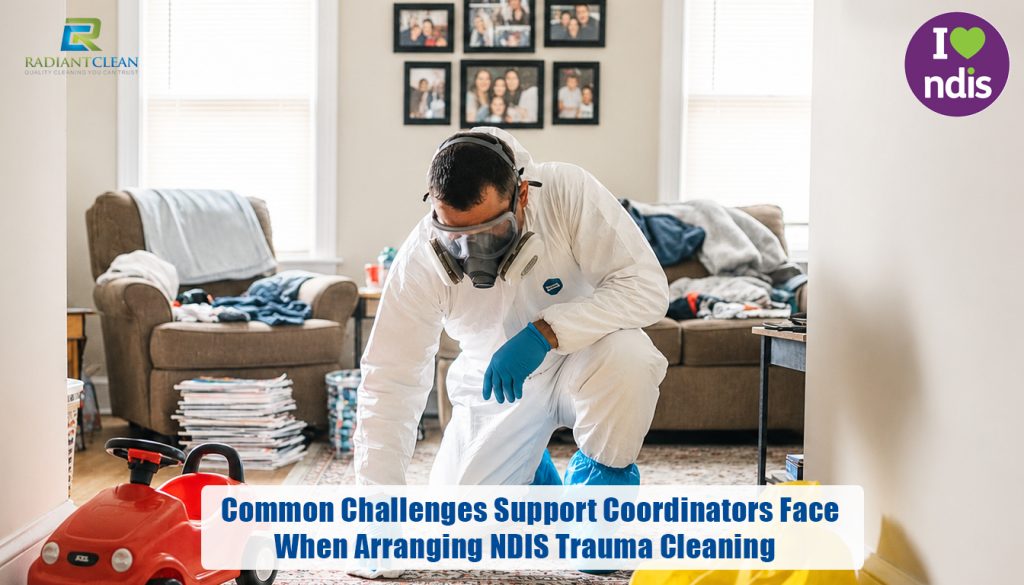
Arranging NDIS trauma cleaning can be challenging for Support Coordinators. Participants may require urgent, sensitive and specialised cleaning support, making it important to carefully consider funding, provider experience and individual needs.
Understanding NDIS Funding
One of the main challenges is determining whether NDIS funding can be used for trauma cleaning. Support Coordinators should review the participant’s plan, funding category and individual circumstances before arranging the service.
Because NDIS plans differ between participants, it is important to ensure the requested cleaning support is appropriate and aligned with the participant’s needs and goals.
Finding a Suitable Provider
Not all cleaning companies are equipped to handle trauma-related situations. Support Coordinators may need to find providers experienced in trauma cleaning, biohazard cleaning, infection control and safe waste handling.
Choosing an experienced provider can help ensure the cleaning is completed safely and professionally.
Handling Sensitive Situations
Trauma cleaning can involve highly personal or distressing circumstances. Participants and families may already be under significant emotional pressure.
Therefore, Support Coordinators should prioritise respect, privacy and compassionate communication. A professional cleaning provider should also understand the importance of maintaining the participant’s dignity throughout the process.
Coordinating Multiple Parties
Support Coordinators may need to communicate with participants, families, cleaning providers and other support professionals. Without clear communication, misunderstandings about the cleaning requirements, timing or responsibilities can occur.
Establishing clear expectations from the beginning can make the process smoother.
Managing Urgent Requests
Some trauma cleaning situations require prompt attention. However, finding an experienced provider with immediate availability can be difficult.
Support Coordinators may need to balance urgency, provider availability, participant preferences and funding considerations when arranging the service.
Clarifying the Cleaning Scope
Trauma cleaning requirements can vary significantly. Some situations may require specialised cleaning, contaminated material removal or additional safety procedures.
Before booking NDIS trauma cleaning, Support Coordinators should clearly communicate the required scope of work so the provider can recommend the appropriate service.
Supporting Participant Choice
NDIS participants should be involved in decisions about their supports wherever possible. Support Coordinators can provide suitable provider options and help participants understand their choices.
Conclusion
Although arranging NDIS trauma cleaning can present several challenges, careful planning and communication can make the process easier. By selecting an experienced provider and considering funding, safety, urgency and participant preferences, Support Coordinators can help participants receive appropriate and respectful cleaning support.
If you need any assistance, please don’t hesitate to contact our Radiant Clean Experts:
📞 Call us: +61 3 9367 7198
🌐 Book online: https://radiantclean.com.au/services/trauma-clean/
▶️ Watch video: https://www.youtube.com/@radiantcleanndis

