

COORDINATING DECLUTTERING FOR PARTICIPANTS WITH PSYCHOSOCIAL DISABILITIES
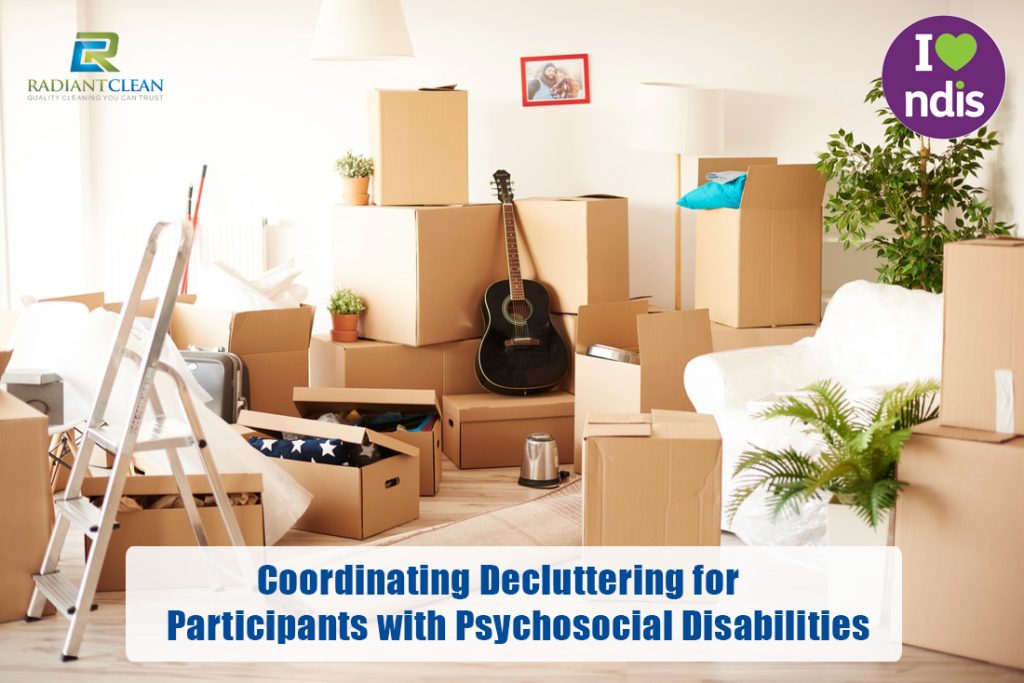
Supporting participants with psychosocial disabilities often requires more than clinical or therapeutic services. A safe, organised living environment can significantly impact mental wellbeing, daily functioning, and independence. Under the National Disability Insurance Scheme, decluttering services may be funded when they are considered reasonable and necessary.
For Support Coordinators, understanding how to assess, justify, and organise decluttering services is essential when working with participants experiencing anxiety, depression, PTSD, schizophrenia, or hoarding-related behaviours.
Why Decluttering Matters for Psychosocial Disabilities
Psychosocial disabilities can affect motivation, executive functioning, decision-making, and emotional regulation. Over time, this may lead to:
- Accumulated clutter
- Unsafe walkways
- Fire hazards
- Hygiene concerns
- Social withdrawal due to embarrassment
A cluttered home environment can increase stress and worsen mental health symptoms. In contrast, an organised space may:
- Reduce anxiety triggers
- Improve mobility and safety
- Support daily living routines
- Increase confidence and independence
Decluttering is not simply about tidying up. It can be a functional support that improves quality of life and reduces risk.
When Can Decluttering Be Funded Under NDIS?
Decluttering is not automatically funded. However, it may be covered if:
- The clutter directly impacts the participant’s safety or wellbeing
- The need is clearly linked to their disability
- The support aligns with plan goals (such as independent living)
- It is deemed reasonable and necessary
Funding may fall under:
- Core Supports (Assistance with Daily Living)
- Capacity Building (Improved Daily Living Skills)
- In some cases, linked to risk mitigation strategies
Support Coordinators should carefully review the participant’s plan and available budgets before arranging services.
The Role of the Support Coordinator
Coordinating decluttering for participants with psychosocial disabilities requires sensitivity, planning, and collaboration.
- Conduct a Needs Assessment
Start by identifying:
- Safety risks (blocked exits, fall hazards)
- Health risks (mould, pest activity)
- Emotional barriers to decluttering
- Participant readiness and consent
Decluttering should never be forced. Trauma-informed practice is critical, especially for participants with hoarding behaviours or past trauma.
- Collaborate with Allied Health Professionals
In complex cases, Support Coordinators may work with:
- Occupational Therapists
- Psychologists
- Support workers
- Behaviour Support Practitioners
Clinical input can strengthen funding justification and ensure the approach supports the participant’s mental health rather than worsening distress.
- Document “Reasonable and Necessary” Justification
Clear documentation is key when arranging NDIS decluttering services. Include:
- How clutter relates to the participant’s disability
- Specific safety or functional impacts
- Risks if the issue remains unaddressed
- Expected outcomes (e.g., improved mobility, reduced anxiety)
Strong documentation supports plan reviews and funding approvals.
- Choose the Right Decluttering Provider
When selecting a provider, consider:
- Experience working with psychosocial disabilities
- Trauma-informed and non-judgmental approach
- Understanding of NDIS compliance
- Ability to work gradually and collaboratively
In many cases, a staged decluttering process is more effective than a one-time intensive clean-out.
If you need any assistance, please don’t hesitate to contact our Radiant Clean Experts:
📞 Call us: +61 3 9367 7198
🌐 Book online: https://radiantclean.com.au/services/decluttering/
▶️ Watch video: https://www.youtube.com/@radiantcleanndis

