

DECLUTTERING FOR PARTICIPANTS WITH COGNITIVE OR MEMORY IMPAIRMENTS: BEST PRACTICE FOR SUPPORT COORDINATORS
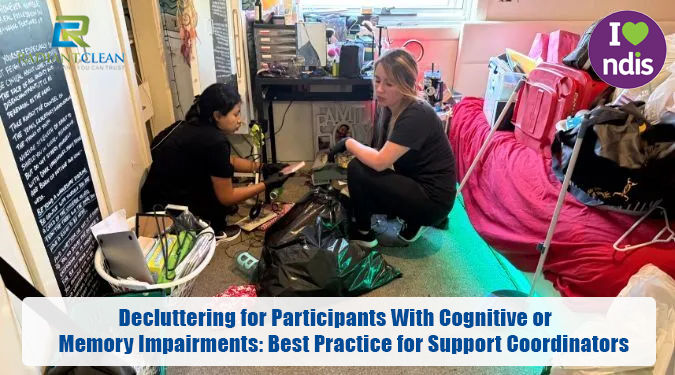
A safe and organised home environment is essential for NDIS participants living with cognitive or memory impairments, including intellectual disability, acquired brain injury, dementia, or neurodevelopmental conditions. These impairments can affect decision-making, organisation, and recall, making it difficult for participants to manage belongings and maintain a safe living space. For Support Coordinators, decluttering services can be an effective support when clearly linked to disability-related needs.
Why Decluttering Is Important
Participants with cognitive or memory impairments may experience disorganisation, difficulty recognising hazards, or challenges maintaining daily routines. This can lead to excessive clutter, blocked walkways, misplaced essential items, and increased safety risks. Common concerns include fall hazards, restricted access to mobility aids, and difficulty completing everyday tasks such as cooking or personal care.
Decluttering helps create a structured and predictable environment. Clear pathways, reduced visual overload, and simplified storage can improve orientation, reduce anxiety, and support independence. For many participants, these changes directly improve safety and functional capacity within the home.
When Decluttering May Be NDIS-Funded
Decluttering may be funded under NDIS Core Supports or Capacity Building Supports when it is considered reasonable and necessary and directly related to the participant’s disability. Support Coordinators should ensure decluttering is positioned as a response to functional limitations rather than general household cleaning.
Examples include:
- Reducing safety risks caused by disorganisation or hoarding-related behaviours
- Supporting participants who cannot manage belongings due to memory or executive functioning impairments
- Improving access for support workers or mobility equipment
- Building skills and systems to help participants maintain a safer home long term
Evidence from allied health professionals, such as occupational therapists or psychologists, can strengthen justification.
Best Practice for Support Coordinators
Best practice involves assessing the functional impact of clutter, clearly linking risks to the participant’s impairment, and using outcome-focused language in NDIS reports. Choosing experienced, trauma-informed decluttering providers is essential, particularly for participants who may feel distressed by change.
Support Coordinators should also focus on sustainability by recommending labelling systems, routines, and education to prevent re-accumulation.
Conclusion
Decluttering for participants with cognitive or memory impairments is not simply a cleaning task. When correctly assessed and documented, it can be a critical support that improves safety, independence, and overall wellbeing. By aligning decluttering services with NDIS criteria, Support Coordinators can confidently recommend them as a reasonable and necessary support.
If you need any assistance, please don’t hesitate to contact our Radiant Clean Experts:
📞 Call us: +61 3 9367 7198
🌐 Book online: https://radiantclean.com.au/services/decluttering/
▶️ Watch video: https://www.youtube.com/@radiantcleanndis

