

HOW SUPPORT COORDINATORS CAN ARRANGE NDIS-FUNDED PEST CONTROL SERVICES
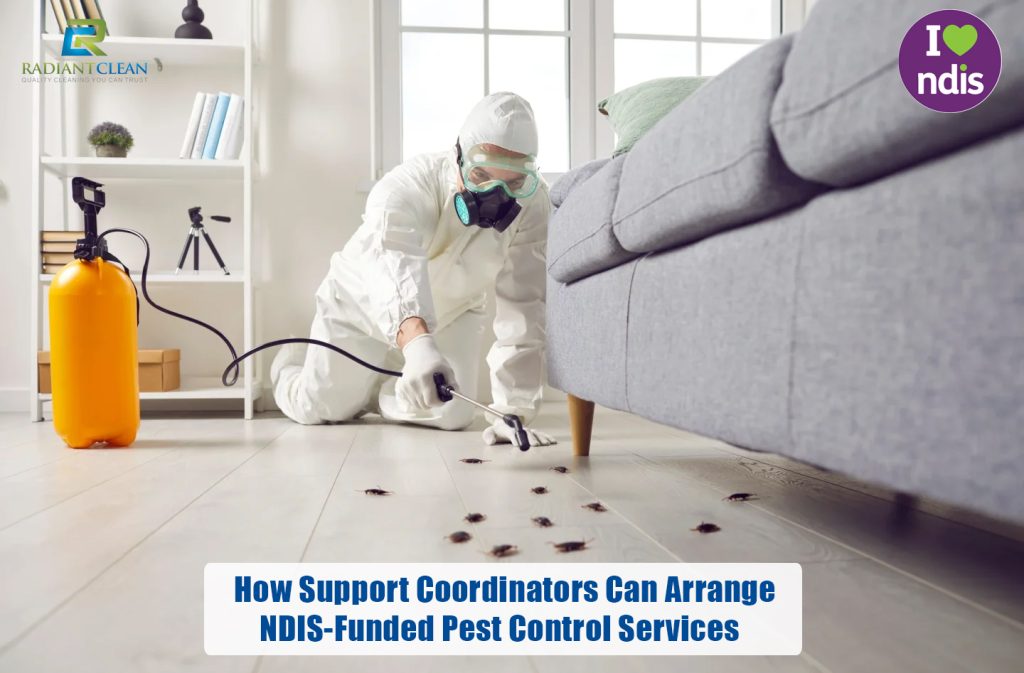
How Support Coordinators Can Arrange NDIS-Funded Pest Control Services
A clean and safe living environment is essential for the health and wellbeing of NDIS participants. However, pest infestations such as cockroaches, rodents, ants, spiders, or bed bugs can create serious hygiene and safety risks. This is particularly true for participants with disabilities affecting mobility, immunity, respiratory health, or sensory regulation. As a result, Support Coordinators play an important role in identifying risks early and arranging NDIS-funded pest control when it is reasonable and necessary.
When Is Pest Control Covered by the NDIS?
Generally, pest control may be funded when it is directly related to a participant’s disability and their ability to live safely at home. Although general household maintenance is not automatically covered, pest control may be considered reasonable and necessary when:
-
Firstly, the infestation poses a health or safety risk
-
Secondly, the participant cannot manage pest control independently
-
Additionally, pests affect daily living, wellbeing, or support delivery
-
Finally, there is a risk to support workers or informal carers
In most situations, these services are funded under Core Supports – Assistance with Daily Living, provided that clear justification is supplied.
Step 1: Assess the Pest Issue and Its Impact
To begin, Support Coordinators should collect key details such as the type of pest, the severity of the infestation, and its impact on daily living. For example, pests may worsen allergies, asthma, sensory sensitivities, or anxiety. Where available, photos, support worker notes, or incident reports can strengthen the request.
Step 2: Confirm Funding and Justification
Next, review the participant’s NDIS plan to confirm available Core Supports funding. At this point, Support Coordinators may need to work with Plan Managers and provide written justification linking the service to disability-related needs. For ongoing issues, further documentation may be required.
Step 3: Engage a Suitable Pest Control Provider
Once funding is confirmed, selecting the right provider is essential. In particular, the provider should use participant-safe, low-toxicity treatments and understand NDIS requirements. Equally important, they should offer flexible scheduling and clear service reports, especially in SIL or SDA settings.
Step 4: Support the Participant Before and After Treatment
Throughout the process, Support Coordinators should explain the treatment, arrange extra supports if needed, and consider sensory or physical needs. After treatment, confirm the issue is resolved and keep all invoices and reports for NDIS records.
Conclusion
In summary, by assessing risks, coordinating suitable providers, and maintaining clear documentation, Support Coordinators help ensure NDIS-funded pest control services protect participant health, safety, and quality of life.
If you need any assistance, please don’t hesitate to contact our Radiant Clean Experts:
📞 Call us: +61 3 9367 7198
🌐 Book online: https://radiantclean.com.au/services/pest-control/
▶️ Watch video: https://www.youtube.com/@radiantcleanndis

