

HOW SUPPORT COORDINATORS CAN DETERMINE IF GARDENING SUPPORT IS REASONABLE AND NECESSARY
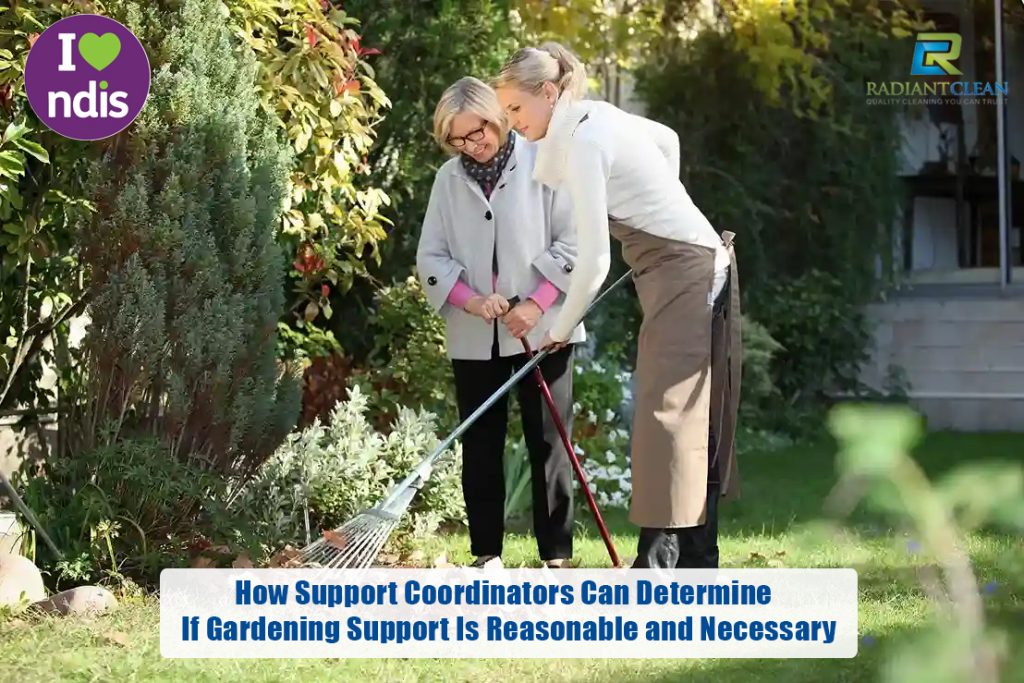
Gardening and yard maintenance can pose significant challenges for many NDIS participants. Tasks such as mowing lawns, pruning plants, or clearing pathways may be unsafe or impossible due to disability-related limitations. Under the NDIS, gardening support can be funded when it meets the “reasonable and necessary” criteria, and Support Coordinators play a key role in making this assessment.
Understanding Reasonable and Necessary Gardening Support
Gardening support is considered reasonable and necessary when it is directly related to a participant’s disability and helps them maintain a safe, accessible living environment. The focus is not on convenience or aesthetics, but on reducing risks, supporting daily functioning, and promoting independence.
Support Coordinators should assess whether the participant would be able to complete gardening tasks without unreasonable difficulty or risk if the support were not provided.
Assessing Functional Capacity
A participant’s functional limitations are central to determining eligibility. Gardening support may be justified when a participant experiences:
- Mobility impairments that limit bending, lifting, or walking on uneven ground
- Vision impairments that increase injury risk
- Psychosocial or cognitive disabilities affecting safety awareness or task planning
- Health conditions that reduce stamina or physical capacity
If gardening tasks could lead to injury, fatigue, or health complications, this strengthens the case for NDIS-funded assistance.
Identifying Safety and Accessibility Risks
Poorly maintained outdoor areas can create serious hazards. Support Coordinators should consider whether overgrown gardens are:
- Blocking entryways or wheelchair access
- Creating slip, trip, or fall risks
- Attracting pests or vermin
- Increasing fire risk, particularly during warmer months
When gardening support helps prevent these risks, it is more likely to meet NDIS funding requirements.
Distinguishing Funded Support From Property Maintenance
NDIS-funded gardening generally covers basic yard maintenance, such as lawn mowing, trimming, and weed control, when required for safety or accessibility. Large landscaping projects or cosmetic improvements are typically not funded. Clearly defining the scope of service helps avoid funding issues.
Documenting the Need for Gardening Support
Clear evidence is essential. Support Coordinators can gather allied health reports, risk assessments, photos, and written explanations linking gardening support to disability-related needs. This documentation is especially important during plan reviews.
Conclusion
Gardening support can be reasonable and necessary under the NDIS when it addresses functional limitations, safety concerns, and accessibility barriers. With careful assessment and documentation, Support Coordinators can confidently determine when gardening services are appropriate and ensure participants receive safe, effective support.
If you need any assistance, please don’t hesitate to contact our Radiant Clean Experts:
📞 Call us: +61 3 9367 7198
🌐 Book online: https://radiantclean.com.au/services/gardening/
▶️ Watch video: https://www.youtube.com/@radiantcleanndis

