

HOW SUPPORT COORDINATORS CAN INCLUDE TRAUMA CLEANING IN AN NDIS PLAN
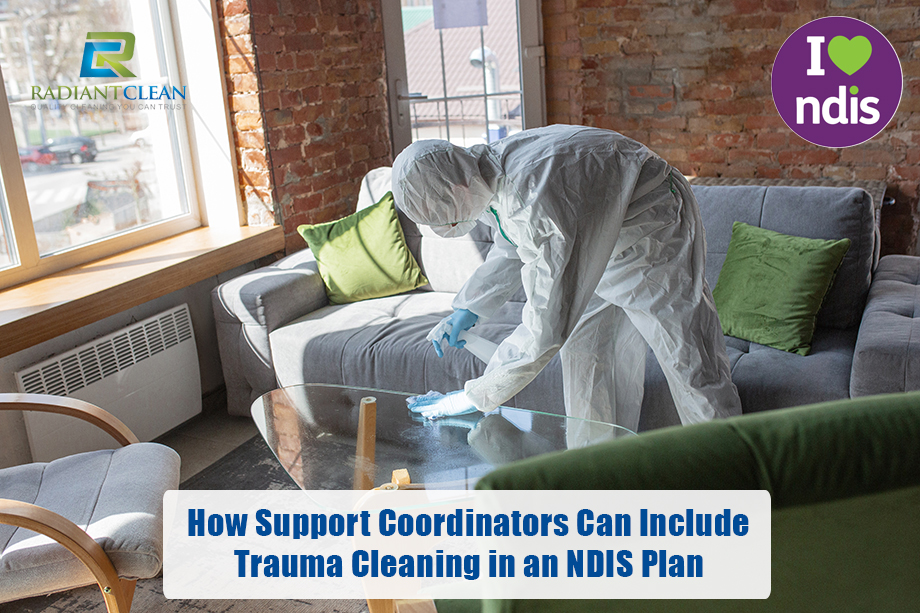
For many participants, unexpected critical incidents can leave their living environment unsafe or emotionally distressing. In these situations, trauma cleaning may become an essential support. Understanding how to appropriately include trauma cleaning in an NDIS plan is important for Support Coordinators who are responsible for safeguarding participant wellbeing and maintaining compliance with National Disability Insurance Scheme guidelines.
When Is Trauma Cleaning Considered Reasonable and Necessary?
Under the NDIS framework, supports must meet the “reasonable and necessary” criteria. Trauma cleaning may qualify when:
- A critical incident has created biohazard or contamination risks
- The participant is unable to safely clean the environment themselves
- The situation presents health and safety risks
- The cleaning supports the participant’s capacity to continue living independently
Support Coordinators should clearly link trauma cleaning to participant goals, such as maintaining safe housing, improving health, or sustaining independent living arrangements.
Identifying the Appropriate Budget Category
In most cases, trauma cleaning services are claimed under Core Supports, particularly Assistance with Daily Living or Household Tasks. However, in complex situations involving behavioural or psychosocial factors, coordinators may need to justify the service within broader support strategies.
Clear documentation is critical. Include:
- Incident reports (if applicable)
- Risk assessments
- Allied health recommendations
- Quotes from qualified trauma cleaning providers
- Explanation of how the service prevents further risk or deterioration
Strong evidence helps demonstrate alignment with NDIS funding criteria.
Building a Clear Justification for Plan Reviews
When preparing for a plan review, Support Coordinators should:
- Document why general cleaning services are insufficient
- Highlight health and safety risks
- Show how professional trauma cleaning restores safe living conditions
- Outline expected outcomes (e.g., reduced risk, improved wellbeing, crisis prevention)
Emphasising participant dignity and safeguarding responsibilities strengthens the case for approval.
Choosing the Right Trauma Cleaning Provider
Not all cleaning providers are equipped to handle trauma-related environments. Support Coordinators should look for:
- Experience with biohazard situations
- Appropriate insurance and certifications
- Compliance with Australian safety standards
- Sensitivity and confidentiality protocols
Selecting a qualified provider ensures both participant safety and compliance with NDIS standards.
Supporting Participant Wellbeing Beyond Cleaning
Trauma cleaning is not only about restoring a physical space—it also supports emotional recovery. A clean, safe environment can reduce stress triggers and help participants re-establish stability after difficult events.
By carefully documenting needs, aligning supports with NDIS criteria, and collaborating with reputable providers, Support Coordinators can confidently include trauma cleaning in a participant’s plan while ensuring safety, dignity, and long-term wellbeing.
If you need any assistance, please don’t hesitate to contact our Radiant Clean Experts:
📞 Call us: +61 3 9367 7198
🌐 Book online: https://radiantclean.com.au/services/trauma-clean/
▶️ Watch video: https://www.youtube.com/@radiantcleanndis

