

HOW SUPPORT COORDINATORS CAN WORK WITH FAMILIES TO ARRANGE SENSITIVE BIOHAZARD CLEANING CASES
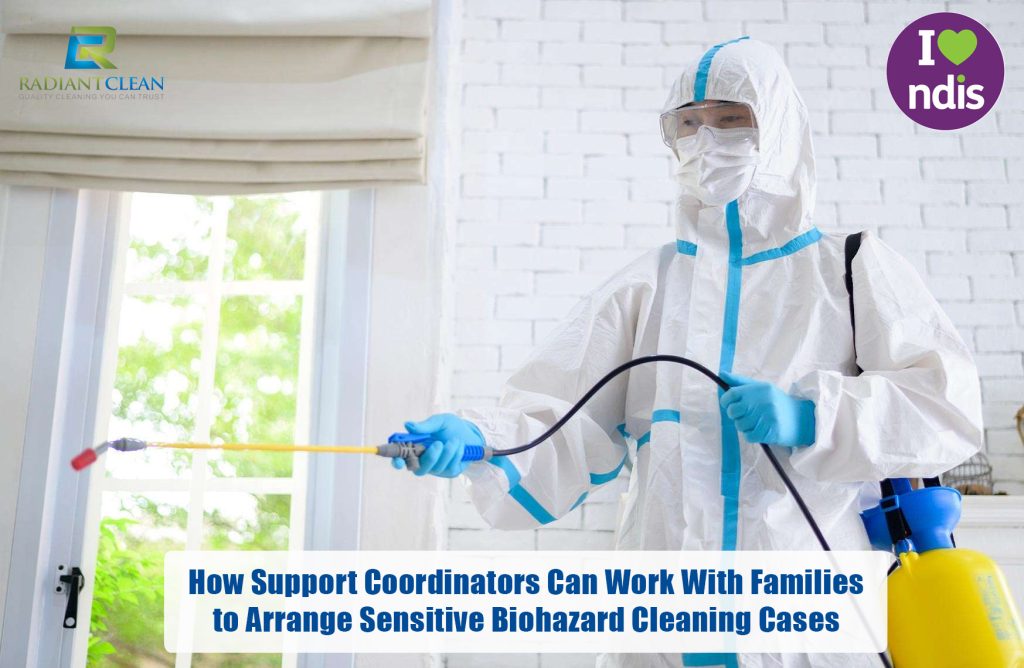
Biohazard cleaning is sometimes essential for NDIS participants living in unsafe conditions—such as hoarding, contamination, or areas affected by bodily fluids. But because these situations can be emotional and complex, support coordinators play a key role in guiding families through the process with care and sensitivity.
-
Communicate With Sensitivity and Respect
Biohazard cases often involve embarrassment, stress, or trauma. Support coordinators should use calm, supportive language and focus on safety, not blame. A respectful approach helps families feel comfortable and more open to receiving help.
-
Explain Why Biohazard Cleaning Is Necessary
Families may not understand why specialist cleaning is required. Support coordinators can clarify:
- Health and safety risks
- Why standard cleaning isn’t enough
- How biohazard cleaning supports the participant’s wellbeing
- How the service aligns with NDIS goals
This builds trust and reduces resistance.
-
Involve the Participant Whenever Possible
Participants should always have choice and control. Support coordinators should include them in decisions, explain the process simply, and provide reassurance—especially if the situation feels overwhelming.
-
Set Clear Expectations With Families
Prepare families by outlining:
- The scope of work
- What items may need to be removed
- Safety protocols and PPE
- Timeframes and access requirements
Clear expectations prevent confusion and stress.
-
Partner With Trauma-Informed Biohazard Cleaners
Choose providers who:
- Understand sensitive NDIS cases
- Follow strict safety standards
- Communicate respectfully and discreetly
- Provide reports for NDIS documentation
A compassionate provider makes a big difference in delicate situations.
-
Coordinate Communication and Logistics
Support coordinators act as the link between the family, participant, and cleaners. They manage scheduling, consent, access, updates, and documentation to ensure everything runs smoothly.
-
Arrange Ongoing Support After Cleaning
In complex cases—especially hoarding—follow-up supports may be needed, such as ongoing cleaning, OT support, or mental health services. This helps maintain a safe home long term.
Conclusion
By combining sensitivity, clear communication, and professional support, NDIS support coordinators can help families navigate biohazard cleaning with confidence. This collaborative approach ensures the participant’s home becomes safer, healthier, and more supportive for daily living.
If you need any help, please don’t hesitate to contact our Radiant Clean Experts:
📞 Call us: +61 3 9367 7198
🌐 Book online: https://radiantclean.com.au/services/bio-hazard-clean/
▶️ Watch video: https://www.youtube.com/@radiantcleanndis

