

HOW TO JUSTIFY RUBBISH REMOVAL DURING AN NDIS PLAN REVIEW
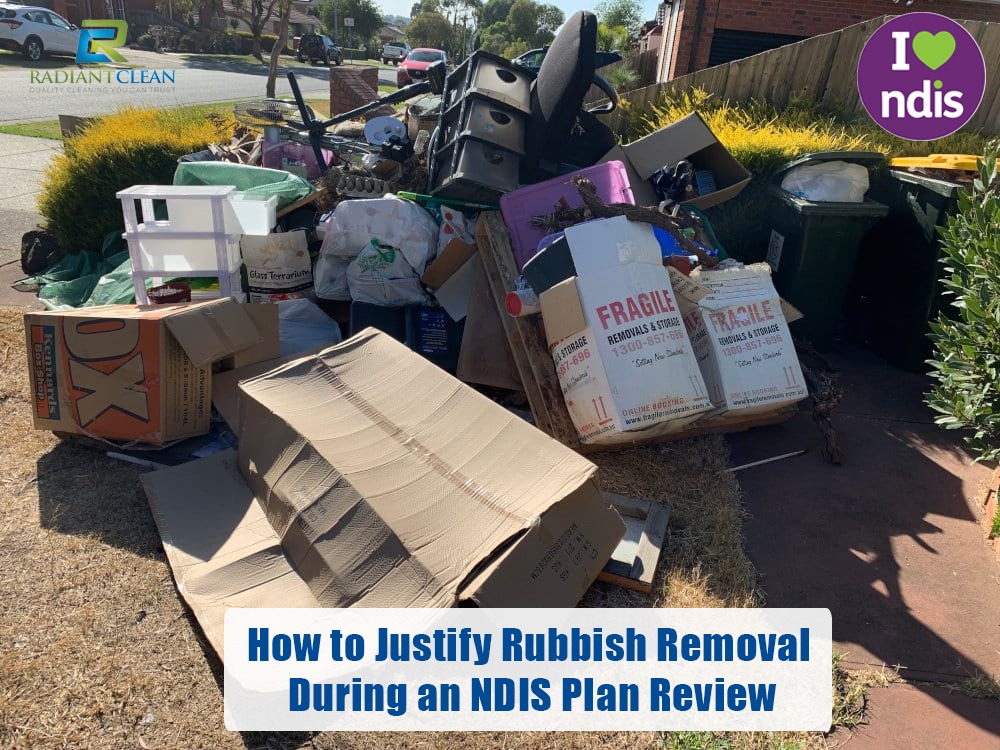
During an NDIS plan review, Support Coordinators may need to explain why rubbish removal is more than a household task. When excess waste or clutter creates safety risks or limits a participant’s ability to live independently, rubbish removal may support their disability-related needs and help achieve better outcomes.
Link the Service to Participant Goals
A strong justification connects rubbish removal to the participant’s NDIS goals, such as:
- Improving home safety and accessibility
- Supporting independent daily living
- Reducing health and safety risks
- Enabling support workers to safely deliver services
- Promoting overall wellbeing
Focus on how the service improves the participant’s functional capacity rather than simply removing unwanted items.
Demonstrate the Need
Support Coordinators should explain how the participant’s disability affects their ability to manage household waste. Consider documenting issues such as:
- Blocked walkways or emergency exits
- Trip and fall hazards
- Limited access for mobility aids
- Pest infestations or hygiene concerns
- Unsafe conditions for support workers
These examples show how rubbish removal addresses disability-related barriers instead of general housekeeping.
Gather Supporting Evidence
Providing clear evidence strengthens the request during a plan review. Helpful documentation may include:
- Occupational Therapist recommendations
- Functional Capacity Assessments
- Support Coordinator or support worker notes
- Home safety assessments
- Photos of hazards (with participant consent)
- Incident reports or participant progress records
The more evidence available, the easier it is to demonstrate the service’s importance.
Highlight the Expected Outcomes
Explain the positive impact rubbish removal will have on the participant’s daily life, including:
- Safer movement around the home
- Reduced risk of falls and injuries
- Improved hygiene and wellbeing
- Better access for support workers
- Greater independence in daily living
Linking these outcomes to the participant’s goals helps demonstrate how the service supports their overall quality of life.
Conclusion
When preparing for an NDIS plan review, Support Coordinators should focus on the participant’s disability-related needs, safety risks, and functional outcomes. By providing strong evidence and clearly connecting NDIS rubbish removal to improved independence, accessibility, and wellbeing, they can build a well-supported case for why the service should be considered as part of the participant’s broader support needs.
If you need any assistance, please don’t hesitate to contact our Radiant Clean Experts:
📞 Call us: +61 3 9367 7198
🌐 Book online: https://radiantclean.com.au/services/rubbish-removal/
▶️ Watch video: https://www.youtube.com/@radiantcleanndis

