

HOW TO LINK UPHOLSTERY CLEANING TO DISABILITY-RELATED NEEDS IN NDIS REVIEWS
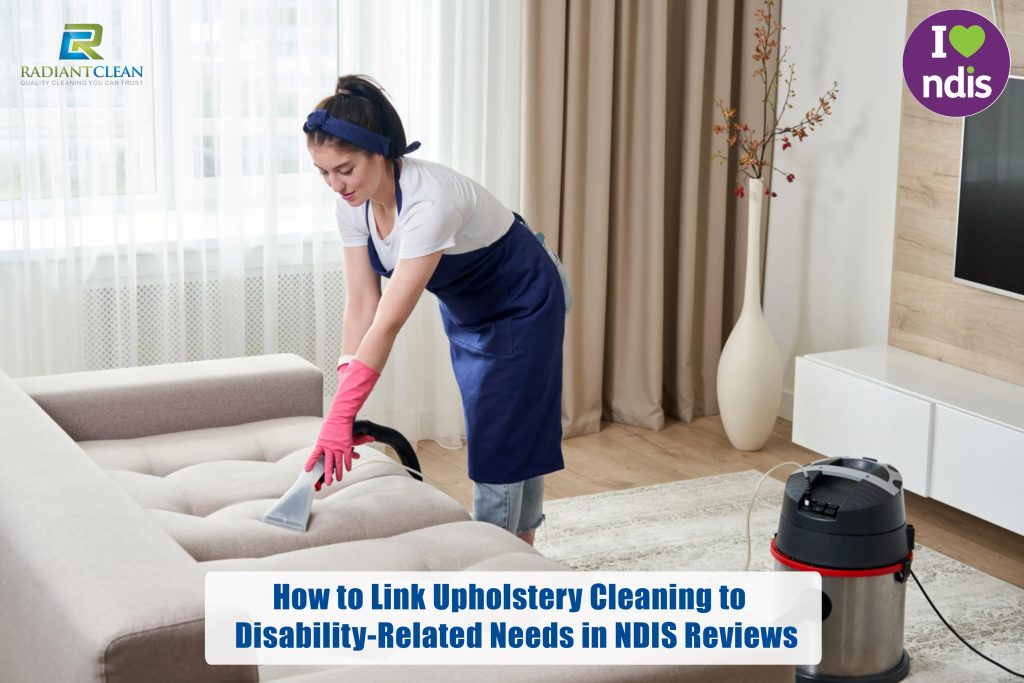
During NDIS plan reviews, Support Coordinators often need to justify why certain household supports are reasonable and necessary. Upholstery cleaning is sometimes misunderstood as general cleaning, but when it directly relates to a participant’s disability-related needs, it can be an appropriate NDIS-funded support.
Upholstery cleaning includes professional cleaning of sofas, chairs, mattresses, mobility seating, and recliners. Under the NDIS, it must address a functional impact of disability, not personal preference or routine housekeeping.
Identify the Disability-Related Impact
Start by clearly outlining how the participant’s disability affects their ability to maintain hygiene. Common impacts include limited mobility, sensory sensitivities, psychosocial barriers, continence issues, fatigue, or respiratory conditions. The focus should be on how the disability limits the participant’s capacity to clean upholstery safely or effectively.
Explain Why Upholstery Is High Risk
Upholstered furniture absorbs dust, allergens, sweat, spills, and bacteria. Standard household cleaning is often insufficient, especially for participants with health vulnerabilities. Poor upholstery hygiene can worsen respiratory symptoms, trigger sensory distress, or increase infection risk. Highlighting these risks helps demonstrate why professional cleaning is necessary.
Link to Functional Limitations
Clearly connect the need for upholstery cleaning to functional limitations. For example, the participant may be unable to lift cushions, operate cleaning equipment, tolerate cleaning chemicals, or maintain consistent hygiene routines due to their disability. This shows the task cannot be reasonably managed independently.
Use Health and Risk Prevention Language
Frame upholstery cleaning as a preventative health and safety support. Regular professional cleaning can reduce the risk of illness, skin irritation, and environmental hazards, helping participants remain safe and independent at home while avoiding higher-cost supports in the future.
Document Clearly and Align With Core Supports
Specify what items require cleaning, how often, and why that frequency is linked to the disability. Upholstery cleaning is commonly funded under Core Supports – Assistance with Daily Living when it supports hygiene, health, and independent living.
When properly documented, upholstery cleaning is not a general household service—it is a targeted support that addresses disability-related risks and improves participant wellbeing.
If you need any assistance, please don’t hesitate to contact our Radiant Clean Experts:
📞 Call us: +61 3 9367 7198
🌐 Book online: https://radiantclean.com.au/services/upholstery-cleaning/
▶️ Watch video: https://www.youtube.com/@radiantcleanndis

