

IDENTIFYING EARLY SIGNS OF PEST INFESTATION IN NDIS HOMES: WHAT SUPPORT COORDINATORS SHOULD KNOW
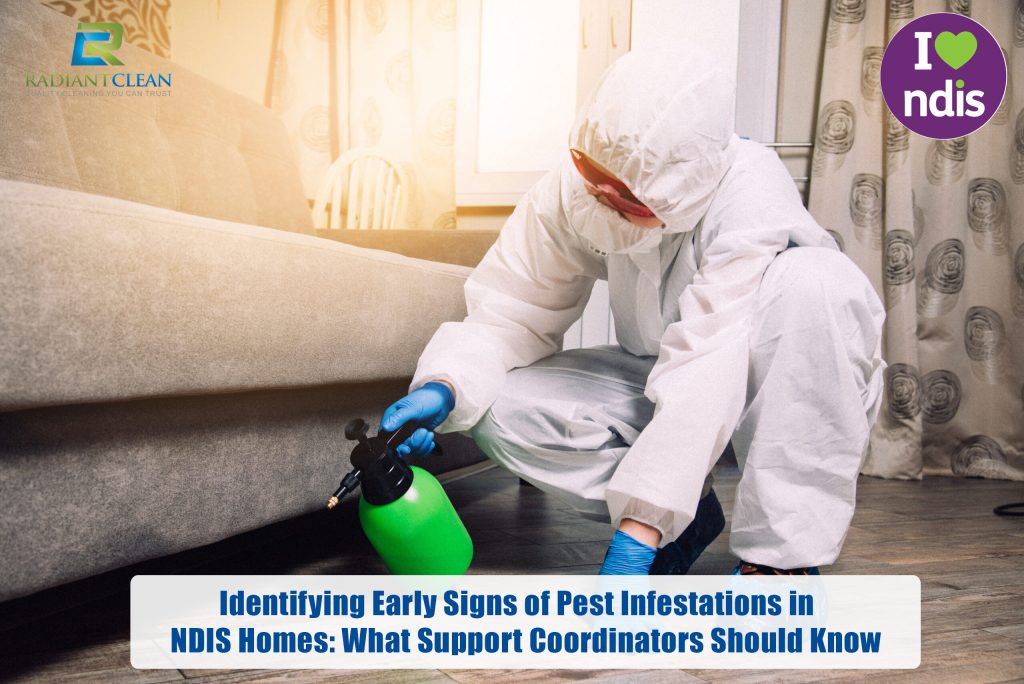
Identifying Early Signs of Pest Infestations in NDIS Homes: What Support Coordinators Should Know
Maintaining a safe, clean, and hygienic home environment is essential for NDIS participants—particularly for those living with mobility limitations, chronic health conditions, allergies, or weakened immune systems. Even minor pest issues can quickly compromise health, comfort, and independence. For this reason, identifying early signs of pest infestations is an important responsibility for Support Coordinators, who play a key role in ensuring participants live in safe and suitable accommodation.
Early detection allows issues to be addressed before they escalate into serious health or safety concerns, helping participants remain comfortable in their homes and avoid unnecessary disruption.
Why Early Signs Matter
Small pest problems rarely stay small. When left untreated, infestations can rapidly worsen and lead to:
-
Increased health risks, including allergic reactions, insect bites, asthma flare-ups, and the spread of bacteria
-
Food contamination and reduced hygiene standards in kitchens and living areas
-
Property damage, which can impact the safety and suitability of the home
-
Heightened stress and anxiety for participants and their families
By recognising early warning signs, Support Coordinators can organise timely, cost-effective pest control services before problems become more complex or expensive to resolve.
Key Early Signs of Pest Infestations
1. Strange Sounds in Walls or Ceilings
Scratching, scurrying, or rustling noises—especially at night—often indicate the presence of rodents or other pests nesting out of sight.
2. Droppings or Unusual Smells
Small pellets, insect droppings, or persistent musty or ammonia-like odours are strong indicators of pest activity and should not be ignored.
3. Damage to Food or Packaging
Gnawed boxes, chewed bags, torn packaging, or visible bite marks usually signal rodents or insects accessing food storage areas.
4. Trails, Grease Marks, or Nesting Materials
Ant trails, grease marks along walls, or materials like shredded paper, fabric, or insulation are common signs of active pests.
5. Live or Dead Insects
Seeing even a small number of cockroaches, ants, spiders, or other insects during the day may suggest a larger, hidden infestation.
6. Structural Damage
Soft or damaged timber, tiny holes, or debris such as fine dust can indicate termites or rodents and require urgent attention.
How Support Coordinators Can Help
Support Coordinators can play a proactive role by:
-
Arranging prompt, professional pest inspections
-
Ensuring treatment plans are safe for participants with allergies or sensory sensitivities
-
Documenting risks and safety concerns to support NDIS funding requests
-
Educating families and carers on simple prevention measures to reduce future issues
Can Pest Control Be NDIS-Funded?
Yes—pest control may be funded by the NDIS if it is considered reasonable and necessary and directly supports the participant’s health, safety, and ability to live independently. Support Coordinators can assist by gathering evidence, obtaining quotes, and working with suitable, NDIS-experienced service providers to ensure compliance.
If you need any assistance, please don’t hesitate to contact our Radiant Clean Experts ✅
📞 Call us: +61 3 9367 7198
🌐 Book online: https://radiantclean.com.au/services/pest-control/
▶️ Watch our videos: https://www.youtube.com/@radiantcleanndis

