

NDIS DEEP CLEANING: WHAT EVERY PLAN MANAGER NEEDS TO KNOW
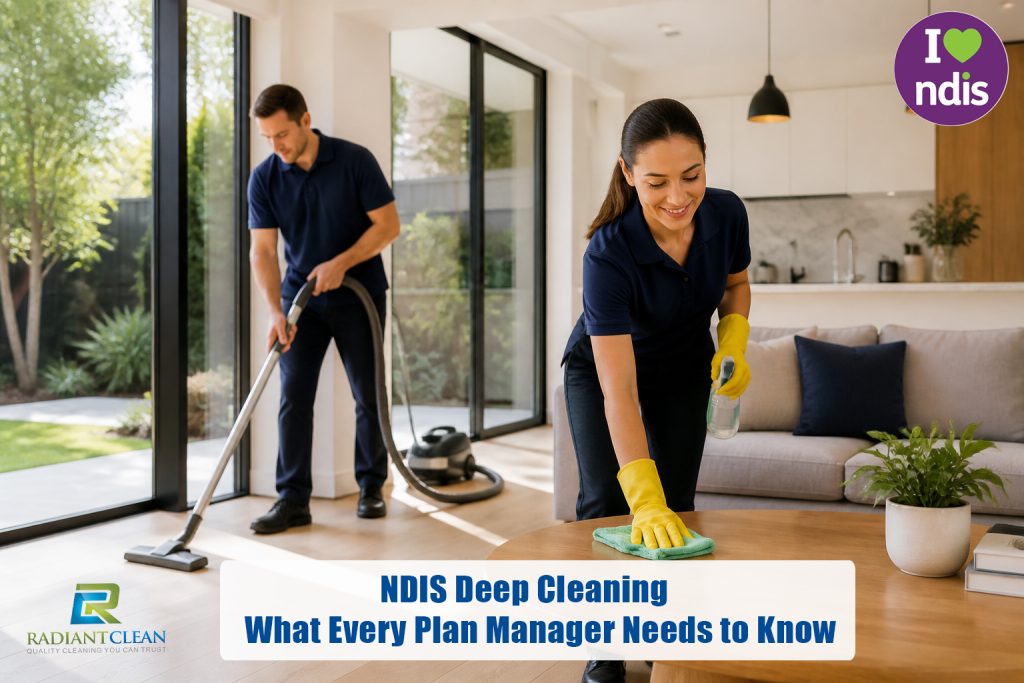
Managing NDIS funding means ensuring participants receive supports that are both effective and compliant with NDIS guidelines. While regular household cleaning is common, however, NDIS deep cleaning may be appropriate when a participant’s disability creates additional hygiene or safety challenges. As a result, understanding when deep cleaning may be relevant can help Plan Managers make informed decisions.
What Is NDIS Deep Cleaning?
Unlike routine household cleaning, deep cleaning goes further by targeting built-up dirt, mould, bacteria, allergens, and hard-to-reach areas. For example, services may include:
- Kitchen and bathroom deep cleaning
- Floor scrubbing and grout cleaning
- Wall and skirting board cleaning
- High-touch surface sanitisation
- Removal of dust and allergens
By addressing these areas, deep cleaning can help create a healthier and safer home environment for participants with disability-related cleaning needs.
Can the NDIS Fund Deep Cleaning?
Importantly, deep cleaning is not automatically funded under the NDIS. Instead, it may be covered if it meets the reasonable and necessary criteria and is directly related to the participant’s disability.
In particular, funding is more likely when:
- The participant cannot safely complete the cleaning themselves.
- The service reduces health or safety risks.
- The need is supported by appropriate evidence, such as recommendations from allied health professionals or Support Coordinators.
Ultimately, each request is assessed based on the participant’s individual plan and circumstances. Therefore, Plan Managers should consider the participant’s specific needs and available documentation before processing a claim.
What Plan Managers Should Check
Before processing a claim, Plan Managers should ensure:
- The service aligns with the participant’s NDIS plan.
- The invoice clearly describes the work completed.
- Supporting documentation is available where required.
- Funding is available within the appropriate budget category.
In addition, working closely with Support Coordinators and service providers can help minimise delays. This, in turn, ensures claims are processed more efficiently and supports are delivered without unnecessary interruptions.
Choosing the Right Cleaning Provider
When selecting a provider, an experienced NDIS cleaning provider should understand participant needs, provide transparent invoices, communicate effectively, and follow appropriate health and safety procedures. Furthermore, clear communication between the provider, Plan Manager, and Support Coordinator can make the claiming process easier.
As a result, participants can receive quality cleaning support while Plan Managers have the documentation and information needed to manage claims appropriately.
Final Thoughts
Overall, professional NDIS deep cleaning can improve hygiene, reduce health risks, and support participants to live in a safer home. For Plan Managers, understanding when deep cleaning may be appropriate—and ensuring claims are backed by clear documentation—can help participants access the supports they need.
At the same time, maintaining accurate records and working collaboratively with relevant providers helps ensure services remain aligned with NDIS funding requirements. Ultimately, this approach supports both participant wellbeing and effective plan management.
If you need any assistance, please don’t hesitate to contact our Radiant Clean Experts:
📞 Call us: +61 3 9367 7198
🌐 Book online: https://radiantclean.com.au/services/deep-clean/
▶️ Watch video: https://www.youtube.com/@radiantcleanndis

