

NDIS PEST CONTROL FOR PARTICIPANTS WITH HOARDING OR UNSAFE LIVING CONDITIONS
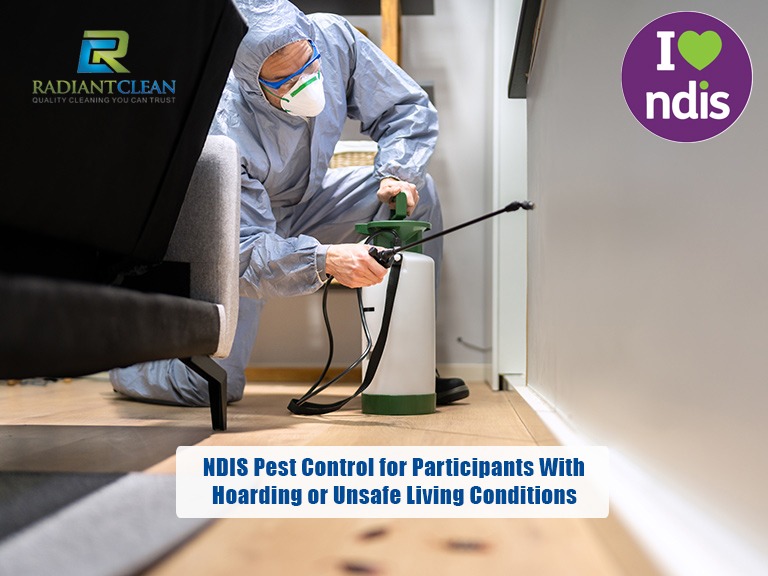
Hoarding, excessive clutter, and unsafe living conditions can create significant hygiene and safety challenges for NDIS participants. When rubbish, food waste, or accumulated belongings attract pests, professional NDIS pest control services may help create a safer and more suitable home environment.
How Hoarding Can Cause Pest Problems
Hoarded items and accumulated waste can provide pests with food, shelter, and breeding areas. Common infestations may include:
- Cockroaches and ants
- Rats and mice
- Flies and other insects
- Bed bugs
- Spiders and other household pests
Excessive clutter can also make pest infestations harder to identify and treat. Therefore, pest control may sometimes need to be coordinated with deep cleaning, hoarding cleaning, or rubbish removal.
When May NDIS Pest Control Be Needed?
Pest control may be relevant when a participant’s disability-related circumstances contribute to difficulties maintaining a safe and hygienic living environment.
Situations may include:
- Significant clutter or hoarding
- Accumulated household waste
- Pest infestations affecting hygiene or safety
- Unsafe or unsanitary living conditions
- Difficulty maintaining the home due to disability-related limitations
However, NDIS funding does not automatically cover every pest control service. Funding eligibility depends on the participant’s individual circumstances, plan, and applicable NDIS rules.
The Role of Support Coordinators and Plan Managers
Support Coordinators can help participants identify environmental concerns and coordinate appropriate services. Plan Managers can also assist with managing eligible service payments and documentation.
For self-managed participants, choosing an experienced provider can make the process easier and more straightforward.
Combining Pest Control With Cleaning
Pest treatment may be more effective when the conditions contributing to an infestation are also addressed. Depending on the situation, participants may require a combination of:
- Hoarding or deep cleaning
- Rubbish removal
- Professional pest treatment
- Ongoing household cleaning
This coordinated approach can help improve hygiene and maintain a safer living environment.
Choosing an NDIS Pest Control Provider
Look for a provider that offers respectful communication, understands disability-related needs, uses appropriate pest management methods, and can coordinate with other household service providers.
Conclusion
For participants experiencing hoarding or unsafe living conditions, NDIS pest control may be an important part of improving household hygiene and safety. Support Coordinators, Plan Managers, self-managed participants, and families can work with suitable providers to determine the most appropriate approach based on individual needs and applicable NDIS requirements.
If you need any assistance, please don’t hesitate to contact our Radiant Clean Experts:
📞 Call us: +61 3 9367 7198
🌐 Book online: https://radiantclean.com.au/services/pest-control/
▶️ Watch video: https://www.youtube.com/@radiantcleanndis

