

SITUATIONS WHERE SUPPORT COORDINATORS SHOULD PRIORITISE DEEP CLEANING IN NDIS HOMES
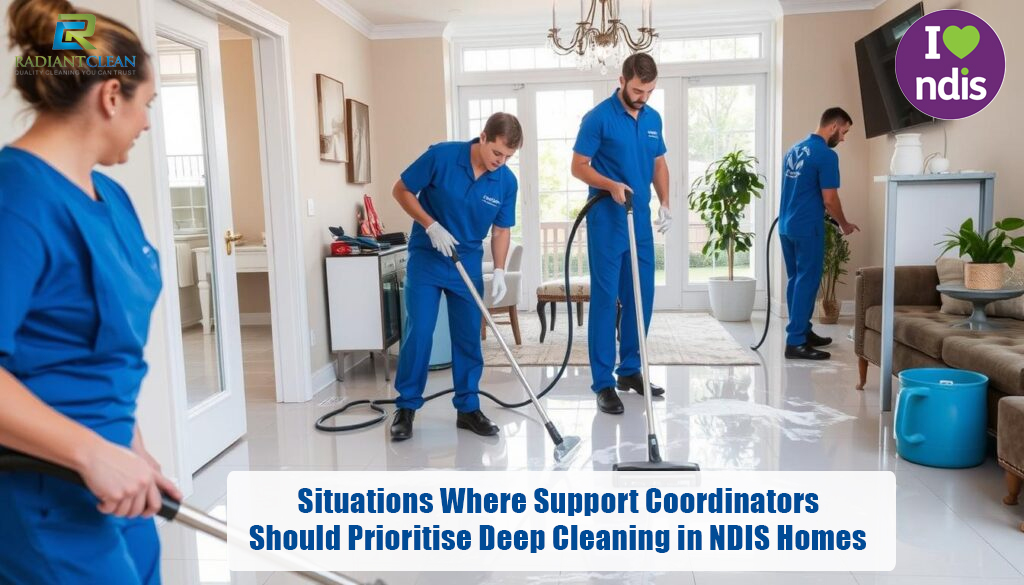
Maintaining a clean and safe living environment is essential under the NDIS. While regular cleaning supports day-to-day hygiene, there are situations where NDIS deep cleaning is necessary to protect participant health, dignity, and compliance. For Support Coordinators, recognising these situations early can help prevent health risks and service disruptions.
Below are the key scenarios where deep cleaning should be prioritised in NDIS homes, including SIL, SDA, and private residences.
After Hospital Discharge or Medical Treatment
Participants returning home after illness or surgery are often more vulnerable to infection. Deep cleaning removes bacteria, viruses, and contaminants that regular cleaning may not address, helping create a safer recovery environment and reducing infection risks.
Following Biohazard or Contamination Incidents
Incidents involving bodily fluids, waste, mould, pest infestations, or spoiled food require professional deep cleaning. These situations pose serious health and safety risks and should be addressed promptly to protect participants, staff, and visitors.
When Homes Are Poorly Maintained
Some participants may be unable to manage daily cleaning due to physical, cognitive, or psychosocial disabilities. Over time, this can lead to unhygienic conditions such as heavy grime, persistent odours, or unsafe kitchens and bathrooms. Deep cleaning can restore the environment and support ongoing maintenance.
During Changes in Living Arrangements
Moving into or out of SIL or SDA housing, changing providers, or welcoming new housemates are key times to arrange deep cleaning. This ensures the home is safe, hygienic, and suitable for incoming residents while reducing cross-contamination and complaints.
After Traumatic or High-Stress Events
Traumatic incidents can leave both physical and environmental impacts. While deep cleaning cannot address emotional trauma, it helps restore cleanliness, dignity, and a sense of safety, supporting participants as routines are re-established.
For Participants With Health Sensitivities
Participants with asthma, allergies, or weakened immune systems are more affected by dust, mould, and airborne contaminants. Deep cleaning of carpets, bathrooms, kitchens, and high-touch surfaces helps reduce ongoing health risks.
In Shared or High-Traffic NDIS Homes
SIL and shared homes experience higher levels of wear due to multiple residents and support workers. Regular deep cleaning supports infection control, improves living conditions, and helps meet quality and safeguarding expectations.
Conclusion
For Support Coordinators, prioritising deep cleaning is a proactive way to manage risk, support participant wellbeing, and demonstrate duty of care. Timely deep cleaning helps ensure NDIS homes remain safe, dignified, and compliant.
If you need any assistance, please don’t hesitate to contact our Radiant Clean Experts:
📞 Call us: +61 3 9367 7198
🌐 Book online: https://radiantclean.com.au/services/deep-clean/
▶️ Watch video: https://www.youtube.com/@radiantcleanndis

