

UNDERSTANDING BIOHAZARD CLEANING FUNDING UNDER SELF-MANAGED, PLAN-MANAGED, AND NDIA-MANAGED PLANS
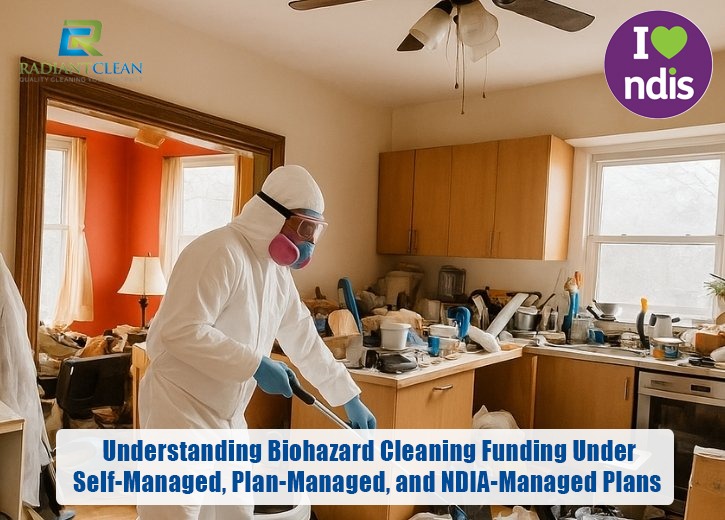
Biohazard cleaning may be necessary after trauma, blood contamination, hoarding, infectious disease exposure, or other hazardous incidents. In these situations, professional cleaning can restore a safe and hygienic environment. For NDIS participants, a common question is whether these services can be funded. Ultimately, the answer depends on individual circumstances and how the NDIS plan is managed.
Can the NDIS Fund Biohazard Cleaning?
The NDIS does not have a specific funding category for biohazard cleaning. However, funding may be available when the service is reasonable and necessary. It must also relate to the participant’s disability. In addition, it should help maintain a safe and accessible home. Therefore, funding decisions are made on a case-by-case basis.
NDIS Biohazard Cleaning Under Self-Managed Plans
To begin with, self-managed participants have the greatest flexibility. They can choose their preferred biohazard cleaning provider. They can also arrange services quickly and manage payments themselves. However, participants should keep all relevant records. These may include invoices, service agreements, and supporting documents. By keeping clear records, participants can better support their funding claims.
NDIS Biohazard Cleaning for Plan-Managed Plans
Similarly, a Plan Manager processes invoices for plan-managed participants. They also help ensure services fit within the available budget. Depending on the situation, they may request supporting documents. These may include medical reports, recommendations, or provider quotes. Furthermore, clear communication can help prevent misunderstandings. As a result, early documentation may reduce payment delays.
NDIS Biohazard Cleaning Under NDIA-Managed Plans
On the other hand, NDIA-managed plans follow a more structured payment process. The NDIA makes payments directly to approved providers. In most cases, participants must use NDIS-registered providers. Additionally, further evidence may be required. This evidence should show a clear link to the participant’s disability. It must also demonstrate that the service meets NDIS funding requirements. Therefore, participants should review their plans before arranging the service.
Choosing the Right Provider
Regardless of the plan type, choosing a qualified provider is important. The provider should have experience with hazardous contamination. They should also follow Australian health and safety standards. In addition, they should use specialised equipment and provide detailed invoices. Moreover, NDIS-experienced providers may understand the required documentation. Consequently, they can help make the claims process smoother.
Final Thoughts
Overall, biohazard cleaning can help participants return to a safe and healthy home. Each plan type follows a different funding process. Therefore, participants should understand their plan before arranging services. They should also prepare the required documents. In addition, an experienced provider can support a smoother process. A Plan Manager or Support Coordinator may also offer helpful guidance. Ultimately, good planning can help services meet NDIS requirements.
If you need any assistance, please don’t hesitate to contact our Radiant Clean Experts:
📞 Call us: +61 3 9367 7198
🌐 Book online: https://radiantclean.com.au/services/bio-hazard-clean/
▶️ Watch video: https://www.youtube.com/@radiantcleanndis

