

WHAT SUPPORT COORDINATORS NEED TO KNOW ABOUT NDIS REGULAR CLEANING SERVICES
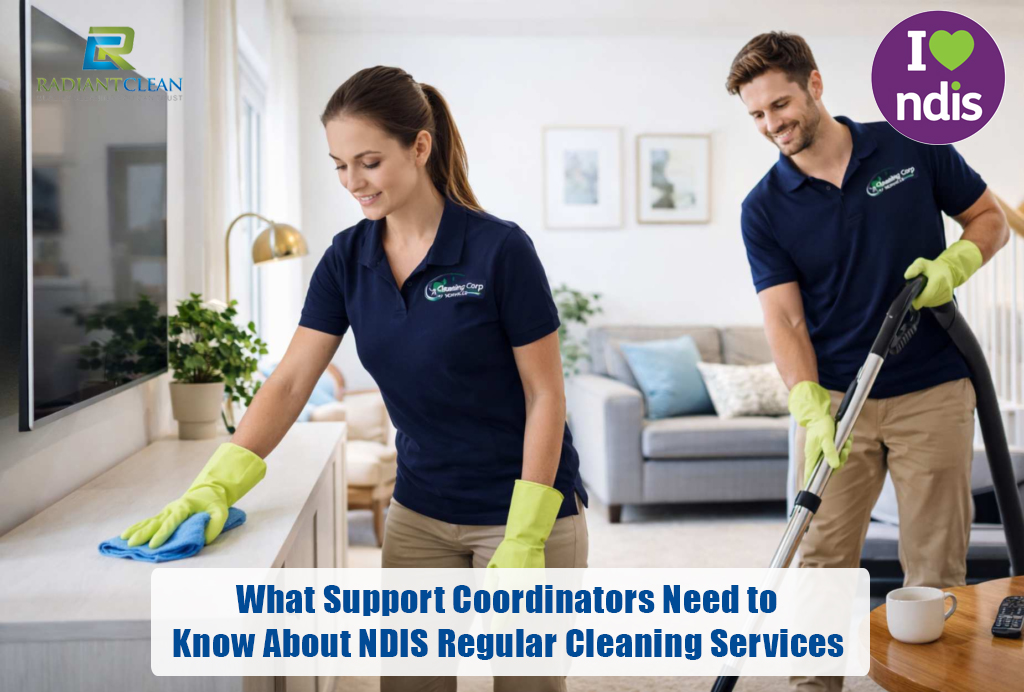
Support coordinators play a vital role in ensuring NDIS participants receive the right services to maintain a safe, healthy, and comfortable living environment. One essential yet often overlooked support is NDIS regular cleaning services. Understanding how these services work can help coordinators make informed decisions that improve participant outcomes.
What Are NDIS Regular Cleaning Services?
NDIS regular cleaning services fall under Core Supports – Assistance with Daily Life. These services are designed to help participants who are unable to maintain their homes due to physical, cognitive, or psychosocial disabilities. Tasks typically include vacuuming, mopping, dusting, bathroom sanitation, kitchen cleaning, and general tidying.
For support coordinators, it’s important to ensure that cleaning services are reasonable and necessary and directly linked to the participant’s goals and functional limitations.
Why Regular Cleaning Matters
A clean home is more than just appearance—it directly impacts a participant’s health, safety, and wellbeing. Poor hygiene can lead to infections, allergies, and increased risks such as slips or falls. Regular cleaning also supports mental wellbeing, especially for participants with anxiety or other psychosocial conditions.
By recommending consistent cleaning schedules, support coordinators help participants maintain independence and a higher quality of life.
Choosing the Right Cleaning Provider
Selecting a suitable provider is critical. Support coordinators should consider:
- Experience working with NDIS participants
- Understanding of compliance and safety standards
- Flexibility in scheduling and service customization
- Clear communication and reporting
Depending on the participant’s plan (NDIA-managed, plan-managed, or self-managed), coordinators may choose between registered or non-registered providers.
Setting the Right Cleaning Schedule
There is no one-size-fits-all approach. The frequency of cleaning services should depend on:
- The participant’s living conditions
- Level of support needs
- Health risks or vulnerabilities
For example, high-needs participants may require weekly or even multiple visits per week, while others may only need fortnightly support.
Monitoring and Ensuring Quality
Ongoing monitoring is essential to ensure the service continues to meet participant needs. Support coordinators should:
- Gather regular feedback from participants
- Review service reports
- Adjust services as needs change
Final Thoughts
NDIS regular cleaning services are a fundamental support that contributes significantly to a participant’s daily life. By understanding funding, choosing the right providers, and ensuring service quality, support coordinators can deliver meaningful, practical support that enhances both independence and wellbeing.
If you need any assistance, please don’t hesitate to contact our Radiant Clean Experts:
📞 Call us: +61 3 9367 7198
🌐 Book online: https://radiantclean.com.au/services/home-cleaning/
▶️ Watch video: https://www.youtube.com/@radiantcleanndis

