

WHAT SUPPORT COORDINATORS SHOULD DO AFTER A BIOHAZARD INCIDENT: STEP-BY-STEP GUIDE
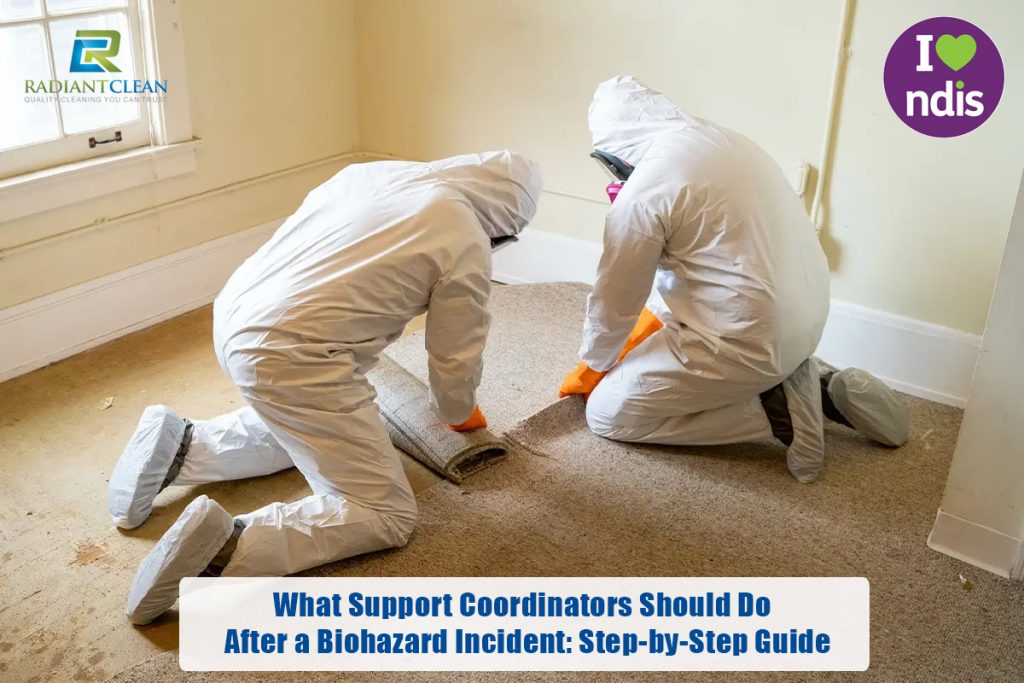
Biohazard incidents in NDIS homes—such as exposure to blood, bodily fluids, hoarding contamination, trauma scenes, or deceased estates—require immediate and professional action. For Support Coordinators, responding correctly is essential to protect participant safety, meet duty of care obligations, and remain compliant with NDIS practice standards.
This step-by-step guide outlines what Support Coordinators should do after a biohazard incident to restore a safe living environment as quickly as possible.
Step 1: Secure the Area and Protect Safety
The first priority is preventing further exposure. Remove participants and support workers from the affected area and restrict access immediately. Avoid any DIY cleaning, as improper handling can spread contamination and increase health risks, particularly for participants with compromised immunity or complex support needs.
Step 2: Assess the Level of Risk
Identify the type and severity of the biohazard, such as blood, bodily fluids, human waste, decomposition, or extreme hoarding. Determine whether the property is safe to occupy or requires urgent professional cleaning. This assessment helps guide next steps, including emergency response and temporary support arrangements.
Step 3: Engage a Professional NDIS Biohazard Cleaning Provider
Only trained and insured biohazard cleaners should manage hazardous materials. Ensure the provider follows Australian health and safety standards, uses hospital-grade disinfectants, and has experience working in NDIS homes, SIL, or SDA settings. Many providers offer 24/7 emergency services, which is critical in urgent situations.
Step 4: Communicate With the Participant and Support Network
Use a calm, trauma-informed approach when explaining the situation. Reassure the participant about safety, timelines, and what to expect during the cleaning process. Coordinate with family members, guardians, and support workers where required, always prioritising participant dignity and wellbeing.
Step 5: Document the Incident and Cleaning Response
Accurate documentation supports NDIS compliance and funding justification. Record the nature of the incident, risk assessment notes, cleaning reports, invoices, and any supporting evidence required for audits or plan reviews.
Step 6: Review Funding and Prevent Future Incidents
Biohazard cleaning may be funded under Core Supports or other relevant categories, depending on the situation. After resolution, consider preventive measures such as regular deep cleaning, home safety assessments, or additional supports to reduce the risk of future incidents.
A clear, structured response ensures Support Coordinators can manage biohazard incidents safely, professionally, and in the best interests of NDIS participants.
If you need any assistance, please don’t hesitate to contact our Radiant Clean Experts:
📞 Call us: +61 3 9367 7198
🌐 Book online: https://radiantclean.com.au/services/bio-hazard-clean/
▶️ Watch video: https://www.youtube.com/@radiantcleanndis

