

WHAT SUPPORT COORDINATORS SHOULD DO AFTER A TRAUMATIC INCIDENT IN AN NDIS HOME
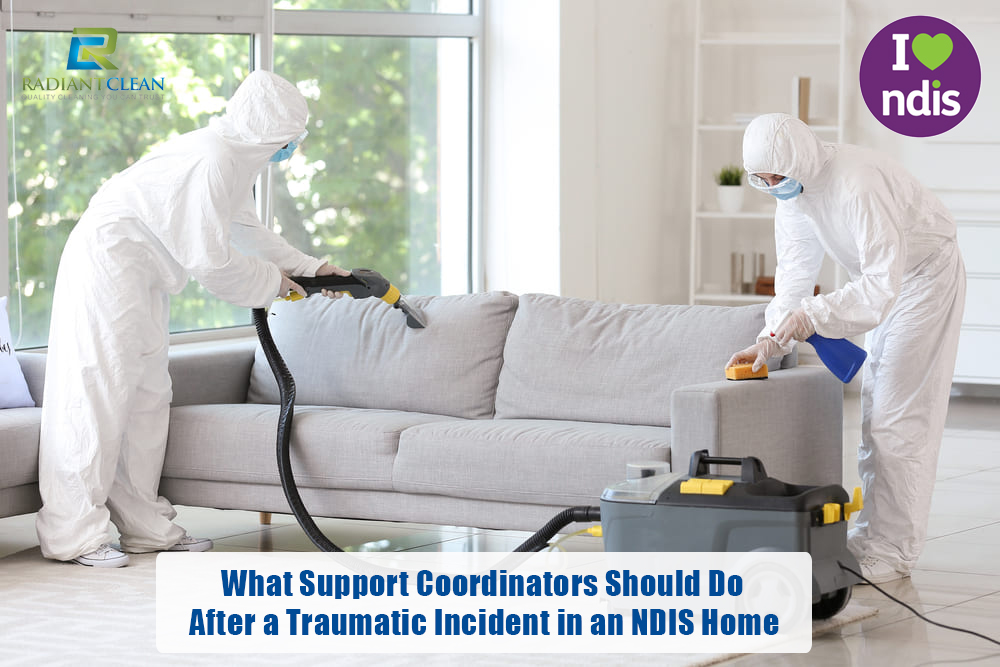
Traumatic incidents in NDIS homes—such as serious accidents, medical emergencies, or other distressing events—require a fast, structured, and compliant response. Support Coordinators must prioritise participant safety while restoring the environment to a condition that is safe to re-enter.
Below are the key steps Support Coordinators should follow after a traumatic incident.
Ensure Immediate Safety
The first priority is to confirm that the participant and anyone else involved are safe.
Support Coordinators should:
-
Contact emergency services if required
-
Confirm the participant is receiving appropriate medical or crisis support
-
Arrange temporary accommodation if the home is unsafe
At this stage, staff should not clean or disturb affected areas, as doing so may create additional health risks.
Secure the Affected Area
Traumatic incidents often leave behind hidden health and safety hazards, such as biological contamination or structural damage.
Support Coordinators should:
-
Restrict access to unsafe areas
-
Prevent untrained staff from attempting general cleaning
-
Keep participants out of the space until professionals assess it
This approach supports NDIS duty of care and reduces the risk of further harm.
Arrange Professional NDIS Trauma Cleaning
General cleaning does not meet safety requirements after traumatic incidents. Support Coordinators must engage a professional NDIS trauma cleaning service to restore the home safely.
Qualified trauma cleaners:
-
Assess contamination and safety risks
-
Apply approved biohazard cleaning methods
-
Remove hazards and thoroughly sanitise affected areas
-
Provide documentation to support NDIS compliance and reporting
Prompt coordination allows participants to return home sooner and with confidence.
Document and Coordinate Funding
Support Coordinators should document:
-
The incident and immediate actions taken
-
The health and safety reasons for trauma cleaning
-
Provider details and service outcomes
Early communication with Plan Managers, housing providers, and SIL/SDA operators helps secure funding and prevents delays.
Support Participant Wellbeing
Trauma cleaning helps reduce the risk of re-traumatisation. Support Coordinators should ensure participants return only after professionals fully clean the environment, confirm safety, and approve the space for re-occupation.
Conclusion
After a traumatic incident, Support Coordinators play a critical role in protecting participant wellbeing. By securing the environment, arranging professional trauma cleaning, and coordinating funding and documentation, they help restore NDIS homes to a safe, dignified, and compliant standard.
If you need any assistance, please don’t hesitate to contact our Radiant Clean Experts:
📞 Call us: +61 3 9367 7198
🌐 Book online: https://radiantclean.com.au/services/trauma-clean/
▶️ Watch video: https://www.youtube.com/@radiantcleanndis

