

WHEN IS BIOHAZARD CLEANING REQUIRED UNDER THE NDIS?
A Guide for Support Coordinators
Biohazard situations can occur in NDIS participant homes when health, safety, or hygiene risks exceed what general cleaning can manage. In these cases, biohazard cleaning becomes a necessary and time-critical support, and Support Coordinators play a key role in identifying the need and arranging appropriate services.
This guide explains when biohazard cleaning is required under the NDIS and how Support Coordinators can respond effectively.
What Is Biohazard Cleaning?
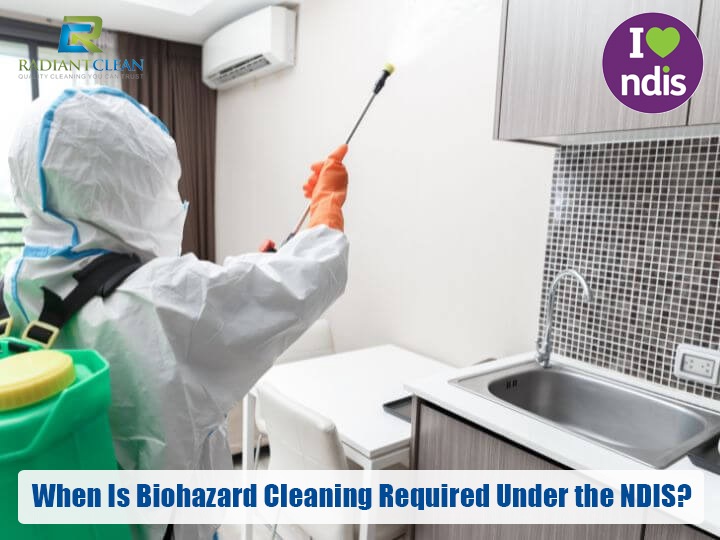
Biohazard cleaning involves the safe removal and disinfection of biological contaminants such as blood, bodily fluids, human waste, and other hazardous materials. These services require trained technicians, personal protective equipment (PPE), and infection-control procedures.
Under the NDIS, biohazard cleaning is considered reasonable and necessary when it supports a participant’s health, safety, and ability to live in their home.
Common Situations Requiring Biohazard Cleaning
Bodily Fluids and Waste
Biohazard cleaning is required when blood, urine, faeces, or vomit contaminate floors, bathrooms, furniture, or bedding. These situations often arise due to incontinence, medical conditions, or reduced capacity for self-care.
Hoarding and Severe Neglect
In cases of hoarding or extreme neglect, biohazards may include waste accumulation, mould, pests, and decomposing materials. Standard cleaners are not equipped to handle these risks safely.
Post-Hospital Discharge or Medical Events
After surgery, illness, or extended hospital stays, biohazard cleaning may be needed to remove medical waste and ensure infection-control standards are met before a participant returns home.
Trauma or Serious Incidents
Following accidents, injuries, or deaths in the home, biohazard cleaning is essential to protect health, maintain dignity, and meet safety regulations.
NDIS Funding Considerations
Biohazard cleaning is commonly funded under Core Supports – Assistance with Daily Living, provided it is directly related to the participant’s disability and not general household maintenance. Clear documentation of risks and quotes from qualified providers help support claims.
The Role of Support Coordinators
Support Coordinators should act early by recognising warning signs such as strong odours, unsafe conditions, or support workers refusing entry. Coordinating experienced NDIS biohazard cleaners helps restore safety, prevent service withdrawal, and avoid escalation.
Conclusion
Biohazard cleaning is required under the NDIS whenever a participant’s living environment poses a serious health or safety risk that cannot be addressed through regular cleaning. By responding promptly, Support Coordinators help protect participant wellbeing, maintain stable supports, and uphold duty of care.
If you need any assistance, please don’t hesitate to contact our Radiant Clean Experts:
📞 Call us: +61 3 9367 7198
🌐 Book online: https://radiantclean.com.au/services/bio-hazard-clean/
▶️ Watch video: https://www.youtube.com/@radiantcleanndis

