

WHEN SHOULD SUPPORT COORDINATORS ARRANGE NDIS BIOHAZARD CLEANING?
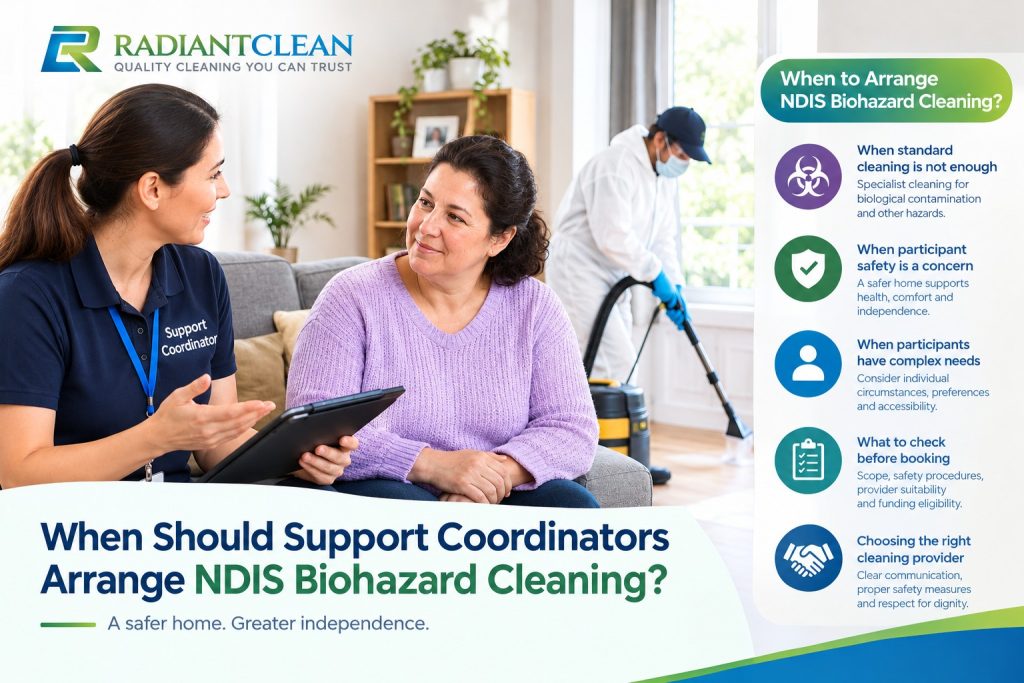
Support Coordinators help NDIS participants access services that meet their individual needs, including maintaining a safe home environment. Sometimes, standard house cleaning is not enough. NDIS biohazard cleaning may be required to address biological contamination and other environmental hazards.
Understanding when to arrange specialist cleaning helps Support Coordinators coordinate appropriate services while respecting participant dignity, privacy, and independence.
When Standard Cleaning Is Not Enough
Some situations require specialised equipment, protective measures, and cleaning procedures. These may include:
- Bodily fluid contamination
- Significant contamination or unsanitary living conditions
- Hoarding situations involving biological hazards
- Areas presenting potential health or safety risks
Support Coordinators should consider the severity of the situation when deciding whether specialist cleaning is necessary.
When Participant Safety Is a Concern
A contaminated home environment may affect a participant’s comfort, daily routines, and ability to use essential living spaces safely.
Support Coordinators can work with participants, families, support workers, and relevant professionals to identify suitable solutions. A specialist cleaning provider can assess the requirements and recommend an appropriate approach to help restore a cleaner, safer living environment.
When Participants Have Complex Needs
Every NDIS participant has different circumstances and preferences. Before arranging biohazard cleaning, Support Coordinators should consider accessibility requirements, privacy concerns, living arrangements, and individual support needs.
Clear communication helps the cleaning provider prepare appropriately and deliver a service that respects the participant’s dignity and independence.
What to Check Before Booking
Before choosing an NDIS biohazard cleaning provider, Support Coordinators should:
- Confirm the scope: Identify the type and extent of cleaning required.
- Check safety procedures: Ask about protective equipment, contamination control, and waste handling.
- Respect participant preferences: Communicate relevant requirements with appropriate consent.
- Verify provider suitability: Review experience, insurance, and relevant qualifications.
- Check funding eligibility: Confirm whether the service meets applicable NDIS funding requirements.
NDIS funding is not automatic for every biohazard cleaning service. Eligibility depends on the participant’s circumstances and applicable funding rules.
Choosing the Right Cleaning Provider
A reliable specialist cleaning provider offers clear communication, appropriate safety procedures, and respect for participant privacy. These qualities help Support Coordinators manage complex cleaning needs more confidently.
At Radiant Clean, we understand that every participant’s situation is different. We focus on understanding individual requirements and identifying suitable cleaning solutions.
Arrange Specialist Cleaning with Radiant Clean
When routine cleaning is insufficient, early coordination can help participants access appropriate support. Contact Radiant Clean to discuss your specialist cleaning requirements and explore suitable solutions for your circumstances.
If you need any assistance, please don’t hesitate to contact our Radiant Clean Experts:
📞 Call us: +61 3 9367 7198
🌐 Book online: https://radiantclean.com.au/services/bio-hazard-clean/
▶️ Watch video: https://www.youtube.com/@radiantcleanndis

