

WHY AGED CARE FACILITIES SHOULD NEVER HANDLE TRAUMA CLEANUP INTERNALLY
Introduction
In aged care facilities, staff must maintain a safe, hygienic, and compassionate environment to protect residents’ wellbeing. However, unexpected incidents such as accidents, injuries, or even death can occur. During these sensitive moments, biohazardous materials often appear, and staff cannot handle them safely without professional training.
At first glance, aged care staff might seem capable of managing the cleanup. Nevertheless, they should never attempt trauma cleaning internally. Certified professionals must manage these situations because they know how to handle biological hazards safely and discreetly.
Protecting the Health and Safety of Residents and Staff
Trauma scenes often contain blood, bodily fluids, and other biohazardous materials that may carry infectious diseases such as Hepatitis B, Hepatitis C, and HIV.
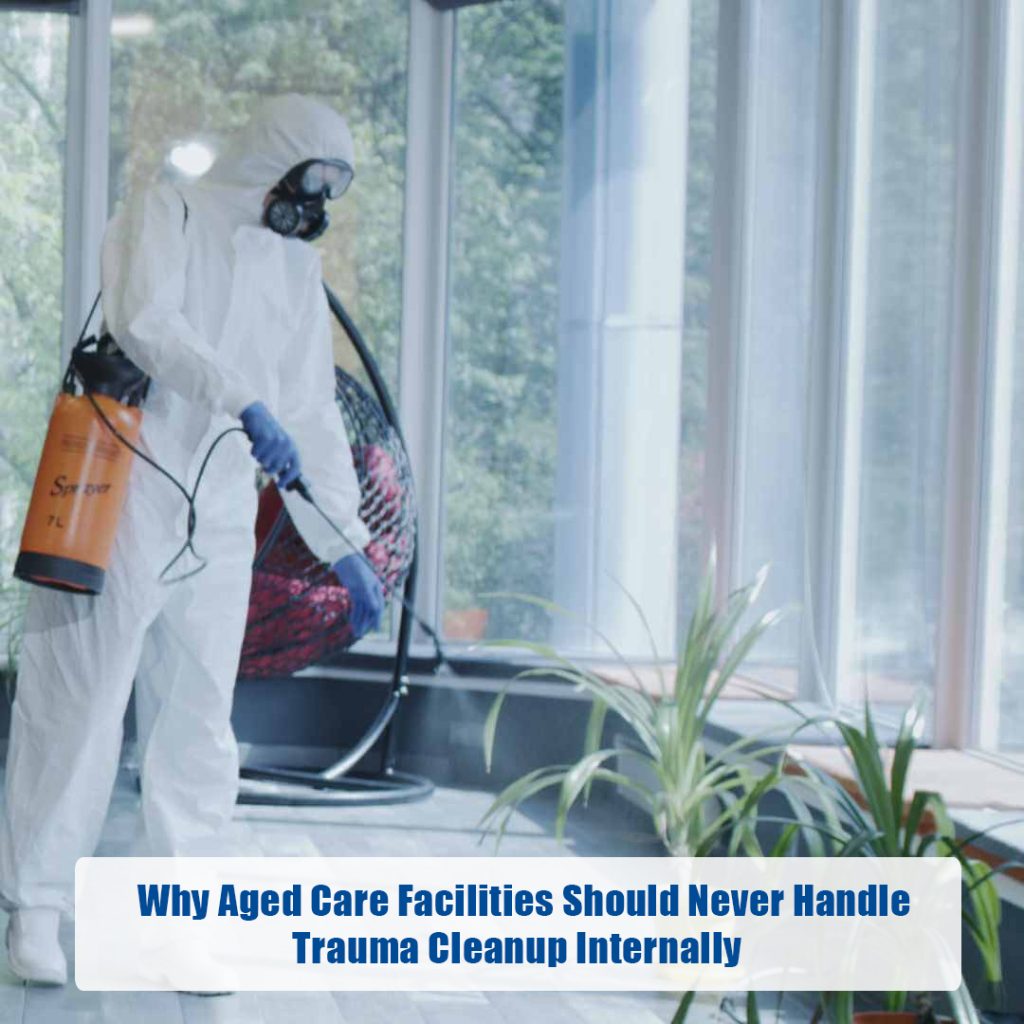
Unfortunately, regular cleaning staff or aged care workers typically lack the training and equipment to handle these risks. Without proper personal protective equipment (PPE) and decontamination procedures, staff can accidentally spread infections or cause cross-contamination throughout the facility.
Professional trauma cleaners follow strict safety protocols and use hospital-grade disinfectants to eliminate harmful pathogens completely. As a result, the facility becomes safe for reoccupation, and residents can resume daily activities without delay.
Compliance with Legal and Health Regulations
Aged care homes must follow local health and safety regulations, particularly those concerning biohazardous waste.
If staff handle or dispose of contaminated materials improperly, the facility risks serious legal consequences, fines, and reputational damage.
Moreover, certified trauma cleaning companies comply with:
• Occupational health and safety standards
• Biohazard disposal regulations
• Environmental protection laws
By hiring professional cleaners, facilities fulfill legal obligations and maintain a high standard of care for residents.
Preventing Emotional Distress Among Staff and Residents
Trauma cleaning often follows deeply distressing events such as accidents or deaths. When aged care staff face these scenes, they can experience emotional trauma, stress, or burnout—especially when they know the individuals involved.
Instead, professional trauma cleaners manage these situations with compassion, discretion, and sensitivity. This approach allows staff to focus on providing emotional support to residents and families rather than confronting the physical aftermath themselves.
Ensuring Thorough Decontamination and Odour Removal
Even after visible traces are removed, biological contaminants can hide beneath surfaces, in carpets, or inside ventilation systems. Therefore, ordinary cleaning methods cannot eliminate these hazards or odours completely.
Professional trauma cleaners use advanced tools and methods, including:
• Enzyme-based cleaning agents
• HEPA filtration systems
• Ozone and hydroxyl machines for odour neutralisation
Consequently, they achieve complete decontamination and odour removal, restoring the environment to a safe, comfortable, and dignified state.
Minimising Reputation and Liability Risks
In the aged care sector, reputation and trust matter. Mishandling a trauma cleanup can quickly lead to complaints, negative publicity, or even regulatory investigation.
However, professional trauma cleaning services demonstrate the facility’s commitment to safety, compliance, and compassion—thereby strengthening trust among residents, families, and staff.
Furthermore, outsourcing reduces liability risks. If an internal cleanup causes infection or damage, the provider could face legal responsibility. Hiring certified professionals prevents these risks.
Allowing Staff to Focus on Care, Not Cleanup
The main responsibility of aged care staff is to provide comfort, care, and emotional support to residents. When trauma cleanup falls to them, it takes time and focus away from caregiving while exposing them to health hazards.
By hiring professional trauma cleaners, facilities can:
• Complete cleanup quickly and safely
• Keep staff focused on care
• Resume operations smoothly with minimal disruption
Ultimately, this approach creates a healthier, more supportive environment for residents and staff alike.
Conclusion
Handling trauma cleanup internally exposes aged care facilities to serious health, emotional, and legal risks. Therefore, partnering with a certified trauma cleaning service ensures professionals manage each incident with the highest standards of safety, sensitivity, and care.
Ultimately, it’s not just about cleaning—it’s about protecting lives, dignity, and peace of mind within the aged care community.
📞 Call us: +61 3 9367 7198
🌐 Book online: https://radiantclean.com.au/services/bio-hazard-clean/
▶️ Watch video: https://www.youtube.com/@radiantcleanndis

