

WHY PROFESSIONAL DECEASED ESTATE CLEANING IS CRITICAL FOR NDIS PROPERTIES
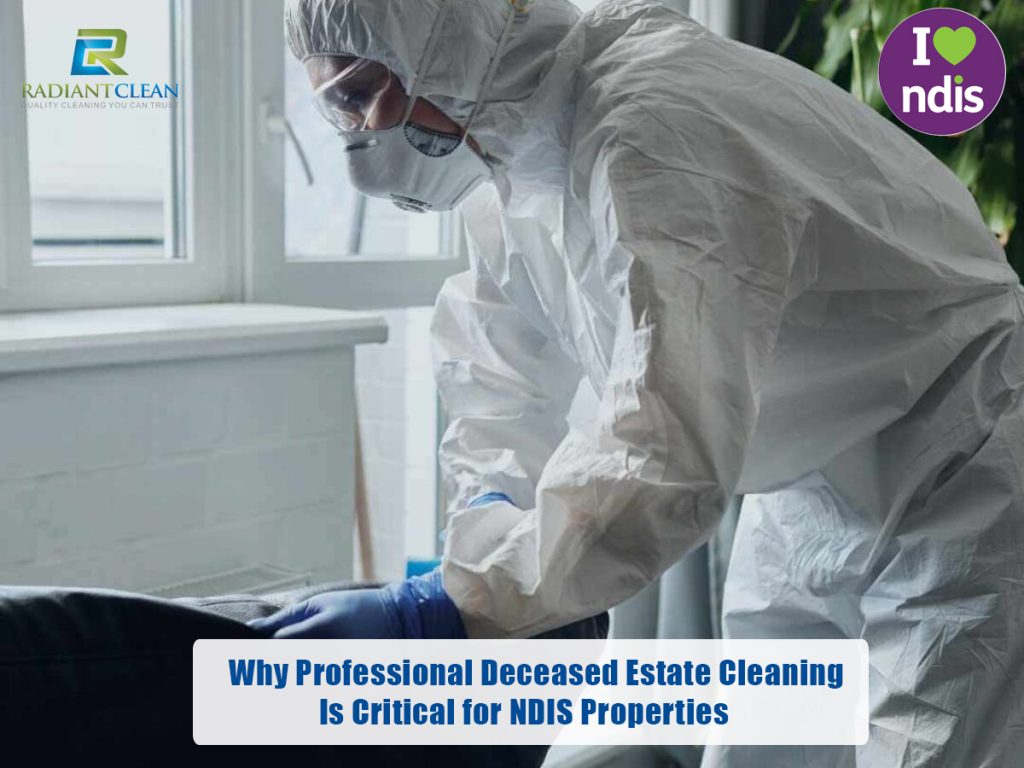
When an NDIS participant passes away, Support Coordinators must manage not only emotional support but also, importantly, the safety and compliance of the participant’s property. During this time, one critical step in the process is arranging professional deceased estate cleaning to ensure that the environment is safe, hygienic, and suitable for re-entry.
What Is Deceased Estate Cleaning in NDIS Properties?
In simple terms, deceased estate cleaning involves the professional removal of biological hazards, odours, and contaminants left after a death. Within NDIS properties specifically, this may include blood, bodily fluids, bacteria, pests, and strong odours—elements that standard cleaning services are neither trained nor equipped to handle.
Furthermore, NDIS homes must meet strict health, safety, and infection control standards. As a result, professional cleaning becomes essential rather than optional.
Why Standard Cleaning Is Not Sufficient
In general, standard cleaning services are designed for surface-level cleaning only. Consequently, they typically lack the specialised training, protective equipment, and hospital-grade disinfectants required to manage biohazards safely.
By contrast, professional deceased estate cleaners are trained to identify hidden contamination in carpets, flooring, furniture, and air systems. This thorough approach ensures that all risks are properly addressed before anyone re-enters the property.
Health and Safety Risks After a Death
Without proper remediation, NDIS properties affected by a death can pose serious health risks, including:
-
Exposure to bloodborne pathogens
-
Bacteria and viruses from bodily fluids
-
Pest infestations
-
Airborne contaminants impacting respiratory health
Therefore, allowing staff, participants, or families to enter the property without professional cleaning can breach duty of care and place vulnerable individuals at risk.
NDIS Compliance and Duty of Care
In addition to health concerns, Support Coordinators are responsible for ensuring environments comply with NDIS Practice Standards—particularly those related to infection control and participant safety. To support this, professional cleaning providers supply documentation confirming the property has been fully remediated and is safe to occupy. This documentation is often required by housing providers and during audits.
Emotional Wellbeing and Respect
Beyond compliance, professional deceased estate cleaning also plays a crucial role in protecting emotional wellbeing. Specifically, it removes distressing visual reminders and completely eliminates lingering odours, helping restore the space with dignity and care—which is especially important in shared or supported accommodation settings.
Final Thoughts
Ultimately, professional deceased estate cleaning is a vital part of managing NDIS properties after a participant’s death. It not only ensures safety and compliance but also supports respectful restoration of the environment. As a result, Support Coordinators can confidently meet their obligations while protecting the wellbeing of everyone involved.
If you need any assistance, please don’t hesitate to contact our Radiant Clean Experts:
📞 Call us: +61 3 9367 7198
🌐 Book online: https://radiantclean.com.au/services/deceased-estate-cleaning/
▶️ Watch video: https://www.youtube.com/@radiantcleanndis

